






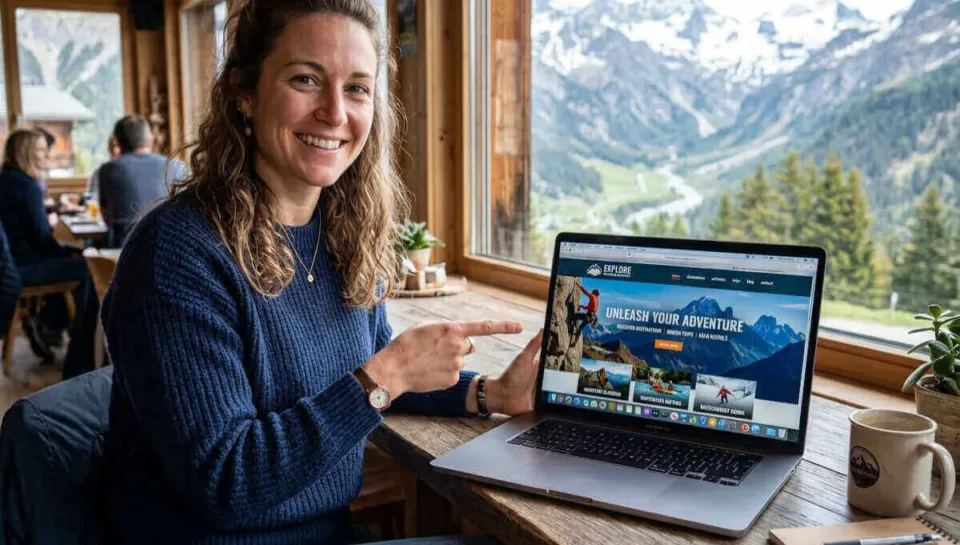
How Adventure Sports Businesses Can Attract More Customers Online
Adventure sports are built around experiences.
Whether customers are looking for rock climbing, whitewater rafting, ziplining, bungee jumping, skydiving, mountain biking, surfing, kayaking, canyoning, paragliding, hiking adventures, off-road experiences, or other adrenaline-fueled activities, they are not simply buying a service.
- They are buying excitement.
- They are buying confidence.
- They are buying a story they can tell later.
And increasingly, they are discovering and evaluating those experiences online before they ever contact an adventure sports business.
A potential customer may see an activity on social media, search for more information, compare different operators, look at photographs and videos, read reviews, check availability, investigate safety procedures, compare packages, and eventually decide whether to make a booking.
That makes a professional digital presence one of the most important assets an adventure sports business can have.
A well-designed adventure sports website can turn curiosity into confidence and confidence into bookings. Combined with search engine optimization, compelling content, social media, online booking functionality, and conversion-focused design, it can become a powerful customer acquisition engine.
For adventure businesses, the goal should not simply be to “have a website.”
The goal should be to build a digital experience that makes prospective customers want to take the next step.
That is where Butterfly Prime Solutions can make a difference.
Understanding the Industry Challenge
Adventure sports businesses operate in a highly visual and experience-driven industry.
That creates tremendous marketing opportunities, but it also creates unique challenges.
Customers want to know what the experience feels like before they commit. They want to see the environment, understand what is involved, know what they need to bring, determine whether the activity is suitable for them, and feel confident that the operator takes safety seriously.
At the same time, adventure businesses compete against numerous alternatives.
A customer searching for an exciting weekend activity might encounter tour operators, outdoor recreation companies, adventure parks, travel companies, independent guides, resorts, experience marketplaces, and social media creators.
Simply appearing online is therefore not enough.
An adventure sports company needs to communicate its value quickly.
Customers Are Buying Experiences, Not Just Activities
An activity description such as “two-hour kayaking experience” does not necessarily sell the experience.
Customers want to know:
- What will I see?
- What will I experience?
- Is it beginner-friendly?
- How exciting is it?
- How physically demanding is it?
- Is equipment provided?
- How long does it take?
- Who can participate?
- What safety measures are in place?
- What should I wear?
- Can I book online?
- What happens after I book?
The more effectively a website answers these questions, the easier it becomes for a customer to make a decision.
Trust Is Especially Important
Adventure sports involve activities that may carry physical risks.
Consequently, customers need more than attractive photography.
They need evidence of professionalism.
Safety information, qualified instructors, certifications where applicable, equipment standards, customer reviews, FAQs, clear policies, and professional communication can all contribute to trust.
A website that ignores these elements may leave visitors uncertain even if the underlying business is highly professional.
Customers Research Before Booking
Adventure experiences are often considered purchases rather than impulse transactions.
Someone may discover an activity today and book several days or weeks later.
That means businesses need to remain visible throughout the customer’s research process.
Search engines, social media, email marketing, online reviews, content marketing, and a professional website can work together to keep the business visible until the customer is ready to act.
Why a Professional Website Matters for Adventure Sports Businesses
An adventure sports website should function as much more than an online brochure.
It can serve simultaneously as a marketing platform, booking system, trust-building tool, content hub, customer education resource, and sales channel.
1. It Turns Inspiration Into Action
Adventure content naturally creates excitement.
A visitor may see an incredible photograph of a rafting expedition or a video of someone completing a zipline course.
But inspiration alone does not generate revenue.
The website must provide the next step.
A strong experience page can move visitors through a simple journey:
Discover → Explore → Understand → Trust → Book
That journey is critical for converting attention into customers.
2. It Gives Every Adventure Its Own Sales Page
Different activities attract different customers.
Someone searching for a beginner kayaking experience has different questions from someone searching for an advanced climbing expedition.
Instead of placing every activity on one generic page, an effective adventure sports website design strategy gives important experiences dedicated pages.
For example:
- Rock climbing
- Whitewater rafting
- Ziplining
- Kayaking
- Mountain biking
- Hiking
- Canyoning
- Paragliding
- Skydiving
- Surfing
Each page can explain the experience while targeting relevant search queries.
3. It Builds Confidence Before the Customer Arrives
A professional website allows businesses to answer concerns before they become objections.
Detailed information about equipment, guides, safety, requirements, schedules, weather policies, age restrictions, and preparation can make prospective customers feel more comfortable.
The website effectively becomes part of the sales team.
4. It Creates an Owned Digital Asset
Social media can be extremely valuable for adventure businesses, particularly because adventure content performs well visually.
However, social platforms do not give businesses complete control over their audience or how information is presented.
A website provides a central destination where the company controls its branding, content, booking experience, customer journey, and data collection.
Benefits of a Professional Website for Adventure Sports Businesses
A strategic adventure sports website can contribute to nearly every stage of customer acquisition.
Generate More Qualified Leads
Search engine optimization and targeted landing pages can help attract people actively looking for specific adventure experiences.
These visitors may already have commercial intent.
Instead of reaching a general audience, the business can attract people searching for exactly what it offers.
Increase Direct Bookings
A visitor who discovers an activity should not have to search elsewhere to determine how to reserve it.
Online booking functionality can shorten the distance between interest and purchase.
Showcase the Experience Visually
Adventure sports are inherently visual.
High-quality photographs, videos, action footage, virtual tours, galleries, maps, and user-generated content can help customers understand the experience before booking.
Strengthen Brand Authority
A professional website communicates that the company is established, organized, and serious about its operations.
It can highlight:
- Experience
- Guides
- Equipment
- Safety procedures
- Accreditations
- Reviews
- Partnerships
- Destinations
- Expertise
Improve Customer Communication
A good website can answer repetitive questions automatically.
FAQs, preparation guides, activity requirements, booking policies, and downloadable information can reduce the number of basic enquiries staff need to handle.
Create Long-Term Organic Traffic
Unlike paid advertising, useful SEO content can continue attracting visitors long after publication.
A well-developed adventure website can build an expanding library of content around activities, destinations, preparation, equipment, safety, and experiences.
Increase Repeat Business
The relationship should not necessarily end after the first booking.
Email newsletters, customer accounts, loyalty offers, seasonal activities, new experiences, and content can encourage previous customers to return.
Essential Website Features for Adventure Sports Businesses
The best adventure sports web design combines visual excitement with practical functionality.
The website needs to inspire visitors without sacrificing usability.
1. An Experience-Focused Homepage
The homepage should immediately communicate what the business offers.
Instead of filling the first screen with generic corporate messaging, use strong visual storytelling.
The opening section could feature:
- An action photograph or video
- A compelling headline
- A concise description
- Featured experiences
- A clear booking button
The visitor should understand the business within seconds.
2. Dedicated Adventure Activity Pages
Every major activity should have its own page.
An effective activity page can include:
- Activity overview
- Difficulty level
- Duration
- Age requirements
- What is included
- What customers should bring
- Equipment information
- Safety information
- Photos and videos
- Available packages
- Pricing
- FAQs
- Reviews
- Booking CTA
These pages can simultaneously serve customers and search engines.
3. Online Booking
An adventure sports online booking system can dramatically reduce friction.
Customers should be able to:
- Select an experience.
- Choose a date.
- Select a time.
- Enter participant information.
- Review requirements.
- Make a payment or reservation.
- Receive confirmation.
The fewer unnecessary steps between discovery and booking, the better.
4. Availability and Scheduling
Adventure businesses often operate according to capacity, weather, guides, equipment, and time slots.
A booking system should therefore make availability clear.
This reduces unnecessary back-and-forth communication.
5. Adventure Packages
Packages can help customers understand the available options.
Businesses might offer:
- Beginner packages
- Family experiences
- Group adventures
- Premium experiences
- Multi-activity packages
- Corporate experiences
- Private adventures
- Seasonal experiences
Each package can have its own landing page.
6. Professional Photography and Video
Visual content is one of the strongest selling tools available to adventure businesses.
Instead of relying exclusively on generic stock photography, businesses should showcase authentic experiences.
Action footage can communicate things that words cannot.
It can show:
- Speed
- Height
- Terrain
- Water
- Landscapes
- Equipment
- Group experiences
- Customer reactions
This helps prospective customers imagine themselves participating.
7. Guide and Instructor Profiles
People are more comfortable participating in adventure activities when they know who is leading them.
Profiles can introduce guides and instructors while highlighting relevant experience, qualifications, specialties, and personality.
This turns an anonymous company into a team of real people.
8. Customer Reviews and Testimonials
Social proof can influence purchasing decisions significantly.
A website should make customer feedback easy to discover.
Testimonials can be integrated into activity pages rather than hidden on a single review page.
9. Safety Information
Safety should have a prominent place on an adventure sports website.
A dedicated safety section can explain:
- Equipment standards
- Guide qualifications
- Participant requirements
- Safety procedures
- Emergency protocols
- Weather considerations
- Activity restrictions
- Preparation requirements
This information can reassure visitors while demonstrating professionalism.
10. Frequently Asked Questions
Adventure customers tend to have practical questions.
A comprehensive FAQ section can address:
- What should I wear?
- Is previous experience required?
- What happens if weather conditions change?
- Are children allowed?
- What equipment is provided?
- How early should I arrive?
- Can beginners participate?
- How physically demanding is the activity?
- What happens after booking?
FAQs can also provide valuable opportunities for SEO.
11. Mobile-First Design
Many adventure customers discover activities while travelling, exploring, or planning trips from their phones.
A mobile-friendly adventure tourism website design is therefore essential.
The mobile experience should make it easy to:
- View activities
- Watch videos
- Read important information
- Call the business
- Send an enquiry
- Check availability
- Make a booking
- Navigate the website
12. Maps and Location Information
Adventure activities are often tied to specific environments.
Interactive maps can help customers understand where experiences take place, meeting points, parking arrangements, routes, and nearby attractions.
13. Strong Calls to Action
Every important page should guide visitors toward an appropriate next action.
Examples include:
- Book Your Adventure
- Check Availability
- Explore Activities
- Plan Your Experience
- Reserve Your Spot
- Contact Our Team
- View Adventure Packages
The CTA should match the visitor’s stage in the decision-making process.
SEO Strategy for Adventure Sports Businesses
A visually impressive website is valuable, but it needs to be discoverable.
This is where adventure sports SEO becomes essential.
Search engine optimization can help an adventure business appear when potential customers actively research experiences.
Build Pages Around Search Intent
Not every visitor searches in the same way.
Some searches are informational:
- What is whitewater rafting?
- Is kayaking difficult for beginners?
- What should I wear for rock climbing?
Others are commercial:
- Best rafting experience
- Guided kayaking trips
- Rock climbing adventure
- Adventure activities
And some are highly transactional:
- Book a rafting trip
- Kayaking tour booking
- Zipline tickets
- Adventure activity reservations
An effective SEO strategy should create content for different stages of this journey.
Create Dedicated Activity Pages
A single “Activities” page cannot effectively target every important search.
Dedicated pages create opportunities to rank for more specific queries.
For example:
/whitewater-rafting/
can target rafting-related searches while
/rock-climbing/
can target climbing-related searches.
This creates a clearer information architecture for both search engines and users.
Create Destination and Experience Content
Adventure businesses can create content around the environments where their experiences take place.
Potential topics include:
- Best adventure activities for beginners
- How to prepare for a rafting trip
- What to expect on your first climbing adventure
- Best outdoor activities for groups
- Adventure experiences for families
- How to choose the right adventure activity
- What to pack for an outdoor adventure
This content can attract people before they are ready to book.
Use Topic Clusters
Instead of publishing unrelated blog posts, create connected content ecosystems.
For example, a business offering kayaking could build a cluster around kayaking:
Core page: Kayaking Adventures
Supporting articles:
- Kayaking for Beginners
- What to Wear Kayaking
- Kayaking Safety Tips
- Best Kayaking Equipment
- How Difficult Is Kayaking?
- Kayaking vs Canoeing
- What to Expect on a Guided Kayaking Trip
Internal links can connect these pages.
This helps establish topical relevance while giving users more reasons to explore the website.
Optimize Visual Content
Adventure websites often contain large image and video files.
Without proper optimization, these can slow down the website.
Images should be appropriately compressed, properly named, and accompanied by descriptive alternative text where appropriate.
Video should also be implemented in a way that does not unnecessarily compromise page speed.
Optimize for Mobile Search
Adventure-related searches frequently happen on mobile devices.
Mobile usability therefore needs to be part of the SEO strategy rather than an afterthought.
Build Internal Links
A customer reading about adventure preparation should be able to discover relevant experiences.
For example:
Adventure Safety Guide → Whitewater Rafting → Rafting Packages → Booking
This creates a logical path from information to conversion.
Create SEO-Friendly Landing Pages
Different audiences can have different needs.
Businesses may benefit from dedicated landing pages for:
- Family adventures
- Group adventures
- Corporate experiences
- Beginner activities
- Private experiences
- Multi-day adventures
- Seasonal activities
These pages can target specific search intent while improving conversion opportunities.
Common Website Mistakes Adventure Sports Businesses Should Avoid
Even exciting businesses can have websites that fail to convert.
Mistake 1: Relying Only on Social Media
Social platforms are powerful discovery channels, but they should not be the entire digital strategy.
The website should act as the central destination where social traffic can learn more and book.
Mistake 2: Using Stunning Images Without Useful Information
Beautiful photographs may capture attention, but customers still need answers.
Visual storytelling should support practical information rather than replace it.
Mistake 3: Hiding the Booking Process
If visitors need to call, email, message, wait for a response, and exchange several messages before making a reservation, some will abandon the process.
Make booking as straightforward as possible.
Mistake 4: Putting Every Activity on One Page
A huge activities page may look convenient from the business’s perspective but can be difficult for users and search engines.
Individual activity pages usually provide a stronger structure.
Mistake 5: Ignoring Safety Information
Safety concerns should never be treated as an afterthought.
Customers need confidence before participating.
Mistake 6: Failing to Explain Who an Activity Is For
Visitors need to understand whether an experience suits beginners, experienced participants, families, groups, or specific age ranges.
Clear qualification information can improve both trust and conversion.
Mistake 7: Making the Website About the Business Instead of the Customer
Customers care about what they will experience.
Instead of writing only about the company, explain what the customer gets.
Mistake 8: Slow Website Performance
Large images, unnecessary scripts, excessive animations, and poorly optimized media can make an adventure website frustrating to use.
A high-impact visual experience should still be technically efficient.
Mistake 9: Weak Calls to Action
If visitors finish reading an activity page without knowing what to do next, the website has missed a conversion opportunity.
Mistake 10: Publishing Content Without an SEO Strategy
A blog filled with random articles may generate little meaningful traffic.
Content should be connected to customer questions, search intent, services, and conversion opportunities.
How Butterfly Prime Solutions Can Help Adventure Sports Businesses Attract More Customers
At Butterfly Prime Solutions, the objective is not simply to create an attractive website.
The objective is to create a digital platform that helps an adventure sports business get discovered, build trust, showcase experiences, generate enquiries, and convert visitors into customers.
Strategic Adventure Sports Website Planning
Every successful website begins with understanding the business.
The website strategy can be structured around:
- Activities
- Target customers
- Booking journeys
- Customer questions
- Search behaviour
- Brand positioning
- Content opportunities
- Conversion goals
This creates a foundation for a website that is built around business outcomes.
Custom Adventure Sports Web Design
Adventure businesses need websites that feel energetic and immersive without becoming difficult to use.
Butterfly Prime Solutions can create designs that combine:
- Strong visual storytelling
- Clear navigation
- Strategic CTAs
- Mobile responsiveness
- Activity-focused layouts
- Conversion-focused interfaces
- Professional branding
SEO-Friendly Website Development
The website can be structured with search visibility in mind from the beginning.
That includes:
- Search-friendly architecture
- Dedicated service pages
- Optimized page structures
- Internal linking opportunities
- SEO-friendly URLs
- Mobile optimization
- Fast-loading pages
- Content-friendly CMS structures
Online Booking Functionality
An adventure business should make it easy for customers to move from interest to reservation.
Butterfly Prime Solutions can help create websites capable of supporting booking journeys, enquiry forms, scheduling functionality, payment integrations, and other relevant customer workflows.
Experience-Based Content Architecture
Instead of treating content as an afterthought, the website can be structured around the questions customers ask before purchasing.
That creates a more useful experience while opening opportunities for organic search traffic.
Conversion-Focused User Experience
The website should make the next step obvious.
Whether that step is booking, requesting information, calling, joining a mailing list, or exploring another activity, the user journey should feel natural.
Mobile-First Development
Adventure customers may discover a business while travelling, planning an outdoor trip, or browsing on the move.
A responsive website ensures that the experience remains effective across smartphones, tablets, laptops, and desktop computers.
Scalable Digital Development
As an adventure business grows, its website may need additional activities, destinations, booking options, content, packages, integrations, and marketing campaigns.
A scalable website foundation makes future growth easier.
Why Choose Butterfly Prime Solutions
Choosing a web design partner for an adventure sports business requires more than finding someone who can cret balance experience, information, trust, technology, SEO, and conversion.
Butterfly Prime Solutions approaches adventure website development with these principles in mind.
Experience-Driven Design
ate attractive pages.
The right partner should understand that the website mus
Adventure websites should communicate energy and excitement while maintaining clarity.
Conversion-Focused Thinking
The goal is not simply to generate page views.
The goal is to encourage meaningful actions.
SEO From the Foundation
Search visibility should be considered during website architecture and development rather than added after the site is complete.
Customer-Centred Structure
Visitors should be able to find the information they need without unnecessary searching.
Strong Visual Storytelling
Photography, video, galleries, and interactive elements can be strategically incorporated to communicate the experience.
Flexible Functionality
From enquiries and bookings to integrations and content management, the website can be designed around the business’s operational requirements.
Long-Term Growth
A professional website should become more valuable as the business adds content, experiences, customers, and marketing campaigns.
Frequently Asked Questions
1. Why does an adventure sports business need a professional website?
A professional website provides a central platform for showcasing activities, building trust, attracting search traffic, answering customer questions, generating enquiries, and accepting bookings.
2. What should an adventure sports website include?
Important features can include activity pages, online booking, pricing, availability, safety information, FAQs, reviews, photography, videos, guide profiles, maps, contact forms, and strong calls to action.
3. Can SEO help adventure sports businesses get more customers?
Yes. Adventure sports SEO can help businesses appear for searches related to specific activities, experiences, preparation questions, destinations, and booking-related searches.
4. Should every adventure activity have its own website page?
Ideally, major activities should have dedicated pages. This creates a better user experience and provides additional opportunities to target specific search queries.
5. Is online booking important for adventure businesses?
Online booking can significantly reduce friction by allowing customers to check availability and reserve experiences without relying entirely on manual communication.
6. How can an adventure business use content marketing?
Businesses can publish helpful content addressing customer questions about activities, preparation, equipment, safety, destinations, difficulty levels, and what participants can expect.
7. How important are photos and videos for adventure websites?
They are extremely valuable because adventure experiences are highly visual. Authentic photography and video can help potential customers understand the experience and imagine themselves participating.
8. Should an adventure sports website be mobile-friendly?
Absolutely. A significant amount of online research happens on mobile devices, so the website should provide a fast, intuitive experience on smartphones and tablets.
9. How can an adventure sports website build trust?
Businesses can highlight customer reviews, experienced guides, qualifications, safety procedures, equipment information, clear policies, professional photography, and transparent activity information.
10. Can Butterfly Prime Solutions build an adventure booking website?
Butterfly Prime Solutions can develop an adventure-focused website around the business’s specific customer journey, including appropriate booking, enquiry, payment, scheduling, content, and third-party integration requirements.
11. How can an adventure sports website generate leads?
Strategic landing pages, SEO, compelling activity descriptions, clear CTAs, enquiry forms, downloadable resources, email signups, online booking, and content marketing can all contribute to lead generation.
12. How can an adventure sports company compete with large experience marketplaces?
A strong website allows an adventure business to build its own brand, strengthen organic visibility, showcase unique experiences, develop direct customer relationships, and encourage direct bookings rather than relying entirely on third-party platforms.
13. How long does it take to build an adventure sports website?
The timeline depends on the website’s complexity, number of activities, booking requirements, integrations, content needs, and design scope. A simple brochure website will require less development than a comprehensive adventure booking platform.
14. Can an existing adventure sports website be redesigned?
Yes. A website redesign can improve visual presentation, navigation, mobile usability, SEO structure, booking functionality, page speed, content architecture, and conversion performance.