





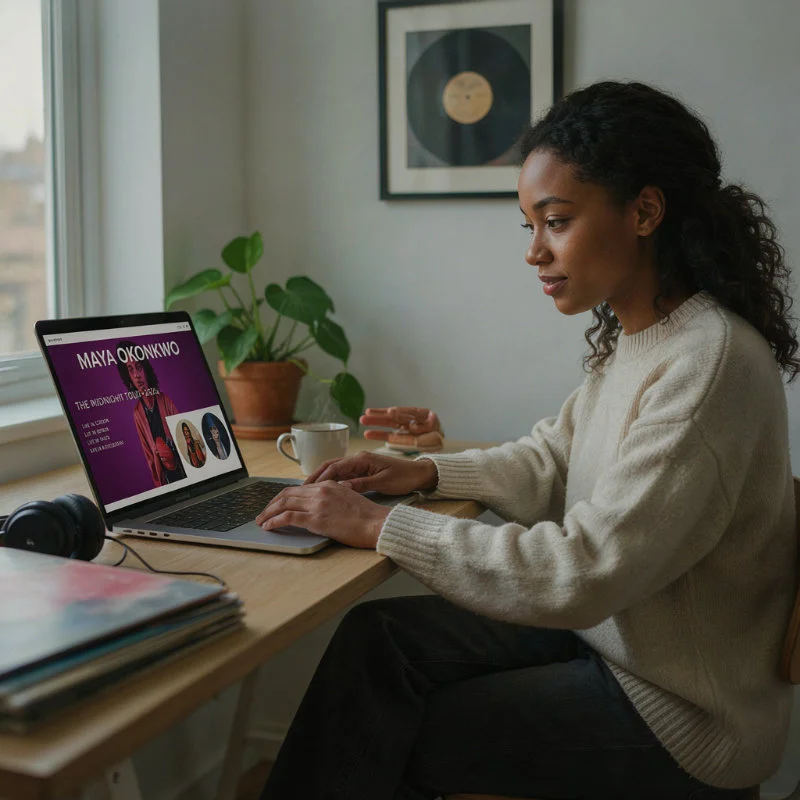
Music Artist Web Design
Professional Music Artist Web Design That Puts Your Music and Brand in the Spotlight
Your music deserves more than a social media profile.
At Butterfly Prime Solutions, we create professional music artist websites designed to help musicians, singers, bands, rappers, producers, DJs, and independent artists build a stronger digital presence.
Your website can bring your music, videos, biography, tour dates, merchandise, social platforms, streaming links, press features, and contact information together in one professionally designed destination.
Whether you are launching your first music career website or rebuilding an outdated online presence, we create a digital platform that reflects your sound, personality, image, and ambitions.
Professional Music Artist Web Design That Puts Your Music and Brand in the Spotlight
Why Work with Butterfly Prime Solutions for your Music Artist Website Design
We don’t just design websites we build digital assets that work. With over a decade of experience, we combine technical excellence with deep marketing insight to deliver results.
We build websites with purpose tailored to your audience, brand voice, and business objectives.
Why Every Music Artist Needs a Professional Website
The modern music industry is highly digital. Artists use platforms such as Spotify, YouTube, Instagram, TikTok, Apple Music, Facebook, and other channels to distribute music and connect with audiences. However, relying entirely on third-party platforms means you don’t completely control your online presence.
A professional music artist website gives you a central digital home for your career. Instead of asking fans to search across different platforms for your latest music, videos, upcoming performances, merchandise, and contact information, your website can bring everything together.
A professionally designed music website can help you:
- Showcase your music
- Embed streaming platforms
- Promote new releases
- Display music videos
- Publish tour dates
- Sell merchandise
- Promote concerts
- Collect fan enquiries
- Build an email audience
- Showcase your biography
- Display press coverage
- Promote collaborations
- Attract event organizers
- Connect with record labels and industry professionals
- Strengthen your personal brand
- Improve your visibility in search engines
Your website becomes the foundation that connects all your digital channels.
Industry Challenges
Digital Challenges Facing Modern Music Artists
Being talented is only one part of building a successful music career. Artists also need a strong digital presence that makes it easy for audiences and industry professionals to discover and engage with them.
Relying Too Heavily on Social Media
Social media can be excellent for audience growth, but algorithms and platform policies can change.
A professional website gives you an online platform that is directly associated with your artist brand.
Music Scattered Across Multiple Platforms
Your music may exist on Spotify, Apple Music, YouTube, SoundCloud, Audiomack, Boomplay, and other platforms.
Without a central website, fans may have difficulty finding everything.
An Inconsistent Artist Brand
Your social media profile, music artwork, biography, photographs, and promotional materials should communicate a consistent identity.
A professionally designed website can bring these elements together.
Difficulty Promoting New Releases
Artists frequently need to promote:
- Singles
- Albums
- EPs
- Music videos
- Collaborations
- Concerts
- Events
A website provides a dedicated space for release campaigns.
Missing Industry Opportunities
Event organizers, promoters, journalists, brands, managers, and other industry professionals may want quick access to your information.
A professional website can make it easier for them to understand who you are and what you offer.
Poor Mobile Experience
Many music fans discover artists through smartphones.
If your website doesn’t work properly on mobile devices, you may lose potential fans and opportunities.
Slow or Unoptimized Websites
Large images, videos, audio files, and embedded media can make music websites slow if they are not properly optimized.
Lack of Search Visibility
When someone searches your artist name, music genre, or related services, you want a professional website to provide another opportunity to appear in search results.
How Butterfly Prime Solutions Helps Music Artist Websites Built Around Your Brand
At Butterfly Prime Solutions, we understand that an artist website should not look like a generic business website.
Your music, image, personality, genre, audience, and career objectives should influence the design. We can create a website that combines creative presentation with practical functionality.
Artist-Focused Design
Your website can be designed around your visual identity, music genre, photography, artwork, typography, and overall brand.
Music-Centric Structure
Your latest releases, albums, singles, playlists, and music videos can receive prominent placement.
Fan-Focused Experience
Visitors should be able to discover your music, follow your channels, see upcoming events, and learn more about you without unnecessary friction.
Industry-Focused Information
The website can also provide useful information for promoters, event organizers, journalists, brands, record labels, managers, and potential collaborators.
Search-Friendly Architecture
Pages can be structured around relevant artist, music, genre, service, and location-related search opportunities.
Features Included In The Music Artist Website
A professional music artist website can include a wide range of features depending on your career and business model.
1. Custom Artist Homepage
Your homepage creates the first impression.
It can feature:
- Artist photography
- Latest release
- Featured music video
- Artist tagline
- Upcoming show
- Streaming links
- Social media
- Primary CTA
The objective is to immediately communicate your identity.
2. Music Streaming Integration
Your website can connect visitors to your music on platforms such as:
- Spotify
- Apple Music
- YouTube Music
- SoundCloud
- Audiomack
- Boomplay
- Tidal
- Deezer
Rather than forcing fans to search for your music, your website can provide convenient access.
3. Music Player
A website can incorporate an appropriate music player so visitors can preview selected tracks directly.
This can be useful for:
- Latest singles
- Albums
- EPs
- Playlists
- Featured tracks
The implementation should balance usability with website performance.
4. Music Release Pages
Every major release can have its own dedicated page.
For example:
- Latest Single
- New EP
- Debut Album
- Latest Collaboration
A release page can include:
- Cover artwork
- Song information
- Streaming links
- Music video
- Lyrics where appropriate
- Credits
- Release date
- Social sharing
- Related releases
5. Music Video Gallery
Your website can showcase your official videos.
Categories could include:
- Official music videos
- Lyric videos
- Live performances
- Behind-the-scenes videos
- Interviews
- Studio sessions
- Short-form content
6. Artist Biography
Your About page can tell your story.
It may cover:
- Artist background
- Musical journey
- Genre
- Influences
- Career milestones
- Major releases
- Collaborations
- Performances
- Awards
- Future ambitions
The content should be authentic rather than sounding like generic marketing copy.
7. Professional Artist Press Kit
A dedicated Electronic Press Kit (EPK) can be extremely valuable.
It can include:
- Artist biography
- Professional photographs
- Music links
- Music videos
- Achievements
- Press coverage
- Performance history
- Contact details
- Booking information
- Downloadable media
This gives industry professionals a convenient resource when considering your work.
8. Events and Tour Dates
Artists who perform publicly can have a dedicated events section.
Display:
- Event Name
- Venue
- City
- Date
- Time
- Ticket Information
- Booking Information
This makes it easier for fans to discover upcoming performances.
9. Online Ticketing Integration
Where appropriate, your website can connect visitors with external ticketing platforms or support relevant event purchasing functionality.
The objective is to reduce the distance between:
Discover Event → View Details → Get Ticket
10. Merchandise Store
Artists can use their websites to promote or sell:
- T-shirts
- Hoodies
- Caps
- Posters
- CDs
- Vinyl
- Accessories
- Signed merchandise
- Limited-edition products
An ecommerce component can turn your website into another revenue channel.
11. Digital Products
Depending on your business model, you can also sell or promote:
- Digital albums
- Sample packs
- Instrumentals
- Production resources
- Exclusive content
- Downloadable music
- Membership content
12. Contact and Booking Forms
A dedicated booking form can help event organizers and potential clients submit project information.
Fields may include:
- Name
- Organization
- Phone
- Event type
- Event date
- Location
- Expected audience
- Budget
- Additional requirements
13. Music Licensing Enquiries
Artists and producers offering music for commercial use can include a dedicated licensing enquiry section.
This can target:
- Advertising agencies
- Film producers
- Television productions
- Brands
- Content creators
- Corporate productions
14. Newsletter / Fan Subscription
Your website can include an email signup system for fans interested in:
- New releases
- Concert announcements
- Exclusive content
- Merchandise
- Behind-the-scenes updates
- Early ticket access
This allows you to build a direct audience outside social media platforms.
15. Social Media Integration
Your website can connect with your existing social channels.
Potential integrations include:
- TikTok
- YouTube
- X
- Threads
The objective isn’t simply to display social media icons but to create a coherent journey between your website and audience channels.
16. Press and Media Section
A dedicated media section can showcase:
- Interviews
- Newspaper features
- Online publications
- Radio appearances
- Television appearances
- Reviews
- Awards
- Industry recognition
This can strengthen credibility.
17. Photo Gallery
Professional photography is an important part of artist branding.
Your website can showcase:
- Promotional photography
- Album artwork
- Live performances
- Studio sessions
- Behind-the-scenes photographs
- Editorial shoots
18. Blog / News Section
A blog can be used to publish:
- New release announcements
- Tour updates
- Music industry news
- Behind-the-scenes stories
- Interviews
- Event announcements
- Collaborations
- Career milestones
It can also contribute to your SEO strategy.
19. Responsive Design
Your website should work across:
- Smartphones
- Tablets
- Laptops
- Desktop computers
Music audiences are highly mobile, making responsive design particularly important.
20. SEO-Ready Architecture
The website can be structured to support:
- Artist name searches
- Genre-related searches
- Music-related keywords
- Location-based searches
- Event searches
- Service searches
- Long-tail searches
How a Professional Music Artist Website Can Benefit Your Career
Strengthen Your Artist Brand
Create a central digital identity that reflects your music and personality.
Reach New Audiences
SEO can help people discover your website beyond your existing social media audience.
Promote Music More Effectively
Give every major release its own online destination.
Generate Booking Opportunities
Make it easier for event organizers and promoters to contact you.
Sell Merchandise
Turn your audience into customers through an integrated ecommerce experience.
Build Direct Fan Relationships
Use email subscriptions and other channels to develop an audience you can communicate with directly.
Present Yourself Professionally
A dedicated website can make your artist brand appear more established when approaching industry professionals.
Control Your Online Presence
Instead of depending entirely on social platforms, you have a central online property representing your career.
Create Additional Revenue Opportunities
Your website can support merchandise, bookings, licensing, digital products, memberships, and other commercial activities.
Our Music Artist Website Design Process
Step 1: Discovery
We begin by understanding:
- Your music
- Your genre
- Your audience
- Your artist brand
- Your existing online presence
- Your services
- Your career goals
Step 2: Website Strategy
We establish:
- Website architecture
- Navigation
- Page requirements
- Conversion pathways
- SEO opportunities
- Integration requirements
Step 3: Content Planning
We determine what content is required for:
- Homepage
- About
- Music
- Videos
- Events
- EPK
- Merchandise
- Contact
- Blog
Step 4: UI/UX Design
We create the visual direction of the website around your artist identity.
Step 5: Website Development
The approved design is transformed into a functional responsive website.
Step 6: Music & Media Integration
We integrate relevant music platforms, videos, galleries, social channels, and other media.
Step 7: SEO Setup
We optimize the website structure, metadata, headings, URLs, internal links, and other relevant SEO elements.
Step 8: Testing
We test:
- Mobile responsiveness
- Forms
- Navigation
- Streaming links
- Ecommerce functionality where applicable
- Performance
- Browser compatibility
Step 9: Launch
The website goes live once everything has been reviewed.
Step 10: Ongoing Support
Your artist website can continue evolving as your career grows.
New releases, events, merchandise, content, collaborations, and other updates can be added over time.
Why Choose Butterfly Prime Solutions?
Industry-Focused Approach
We don’t treat an artist website like a generic corporate website.
Brand-Centered Design
Your visual identity remains central to the website experience.
SEO Strategy
We consider search visibility while developing the website architecture.
Conversion-Focused Development
The website is designed to encourage meaningful actions such as streaming, booking, purchasing, subscribing, and contacting.
Scalable Architecture
The website can grow alongside your music career.
Mobile-First Thinking
Your audience should be able to experience your website from virtually any device.
Business-Minded Web Design
Beyond aesthetics, we consider how the website can support your broader career and revenue objectives.
Industry-Specific Integrations & Functionality
A music website can connect with a wide range of external platforms and technologies.
Music Streaming Platforms
Integrate relevant streaming services to make your releases easily accessible.
YouTube
Embed official music videos, live performances, interviews, and other video content.
Social Media
Connect your website with your audience channels.
Ecommerce
Sell merchandise and digital products.
Payment Gateways
Where ecommerce is required, appropriate payment systems can be integrated.
Email Marketing
Connect newsletter forms with an email marketing platform.
Booking Systems
Allow fans, promoters, or organizations to request appearances and consultations.
Event Platforms
Connect upcoming events with relevant ticketing services.
Analytics
Track important visitor and conversion activity.
CRM Integration
Where appropriate, enquiries can be routed into a CRM system for better lead management.
Marketing Automation
Automated email confirmations, enquiry notifications, subscriber workflows, and other processes can be incorporated.
API Integrations
Custom APIs can be considered where a music, ticketing, ecommerce, CRM, or third-party platform needs to communicate with the website.
Why Music Artists Need a Professional Website More Than Ever
The music industry has never been more connected. Today, an artist can release a song independently, reach listeners across the world, promote a music video on social media, sell merchandise online, and communicate directly with fans without relying entirely on a traditional record label.
But with this increased digital opportunity comes a new challenge: standing out.
Thousands of musicians, singers, rappers, DJs, bands, producers, and independent artists are competing for attention across the same social platforms and streaming services. Having great music is essential, but having a professional digital presence can be equally important.
A professionally designed music artist website gives an artist a dedicated online home where music, branding, content, events, merchandise, bookings, and career opportunities can come together.
FAQs About Music Artist Websites
01
What is music artist web design?
02
Why does a music artist need a website?
03
What should a music artist website include?
04
Can you integrate Spotify and other music platforms?
05
Can I sell merchandise through my music website?
06
Can my website promote my new music releases?
07
Can you build an Electronic Press Kit website?
08
Can my website include upcoming concerts and events?
09
Can a music artist website rank on Google?
10
Can you optimize my music website for mobile devices?
11
Can I use my existing domain name?
12
Can my website include a music player?
13
Can I use my website to get bookings?
14
How much does music artist website design cost?
15
Can Butterfly Prime Solutions maintain my music website after launch?
Ready to Build a Music Artist Website That Represents Your Sound?
Your music is unique. Your website should be too.
Whether you’re an emerging independent artist, established musician, singer, rapper, band, DJ, producer, songwriter, or music professional, your online presence should communicate the quality and personality behind your work.
A professionally designed website can give you a central platform to:
- Promote your music.
- Grow your audience.
- Showcase your videos.
- Promote your events.
- Sell merchandise.
- Attract bookings.
- Build industry credibility.
- Improve your online visibility.
- Strengthen your artist brand.
Don’t let your music career live entirely on platforms you don’t control.
Build a professional digital home for your music with Butterfly Prime Solutions.