





Why Catering Businesses Need a Professional Website More Than Ever
Catering is an industry built around experiences.
People do not simply purchase food from a catering business. They purchase confidence that their guests will be well fed, their event will run smoothly, their dietary requirements will be respected, their presentation will meet expectations, and the catering team will deliver what was promised.
That makes the decision-making process particularly important. Before contacting a caterer, potential clients often want to know what the business offers, what its food looks like, what types of events it handles, whether its menus fit their needs, how professional the team appears, and how easy it is to request a quote.
A strong online presence can answer these questions before the first phone call.
This is where professional catering website design becomes more than an aesthetic investment. A well-built catering website can become a digital sales representative that operates around the clock, presents your services professionally, captures enquiries, promotes menus, supports search visibility, and guides potential customers toward booking.
Social media can showcase beautiful food photography. Online directories can introduce customers to your company. Recommendations can generate valuable referrals.
But your website gives you something those platforms cannot fully provide: a digital home that your catering business controls.
A professionally designed website allows catering companies to bring their brand, menus, services, event capabilities, testimonials, photography, enquiry process, and calls to action together in one carefully structured experience.
For catering businesses competing for weddings, corporate events, parties, private functions, conferences, celebrations, and other occasions, that can make a significant difference.
With the right catering web design and SEO strategy, your website can move beyond being an online brochure and become a powerful tool for attracting and converting customers.
Understanding the Industry Challenge
Catering businesses face a unique digital marketing challenge.
Unlike some businesses where customers make quick purchases, catering decisions can involve significant planning. A client may be organising a wedding several months in advance, arranging food for a corporate event, planning a birthday celebration, coordinating a conference, or looking for recurring catering services.
That means potential clients need information.
They may want to know:
- What types of events does the caterer handle?
- What menus are available?
- Can menus be customised?
- Does the business cater for dietary requirements?
- How many guests can the team accommodate?
- Are staff and serving equipment included?
- Does the caterer provide setup and cleanup?
- Can the business handle corporate functions?
- Are tasting sessions available?
- How far in advance should clients book?
- How can someone request a quotation?
- What does the catering experience actually look like?
If your website does not answer these questions, visitors may leave and continue searching.
Catering Is Highly Visual
Food is visual.
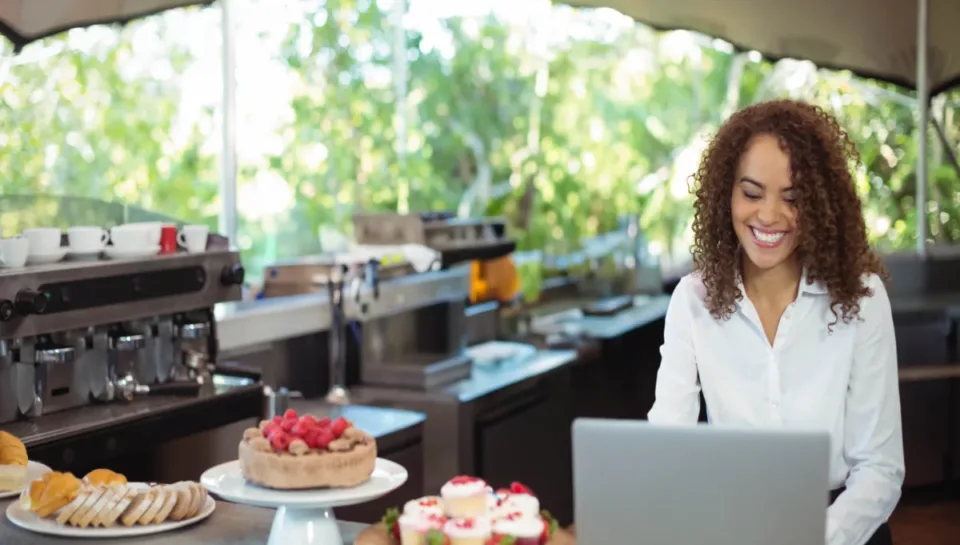
Clients want to see beautifully presented dishes, buffet arrangements, plated meals, dessert tables, grazing stations, event setups, serving teams, and previous catering environments.
A website that fails to communicate visually can make even an excellent catering company appear less established than it actually is.
Catering Purchases Depend on Trust
A catering client is trusting your business with an important occasion.
That means credibility matters.
Your website needs to communicate professionalism from the first interaction. Poor design, outdated information, broken pages, difficult navigation, missing contact details, or low-quality photography can create unnecessary doubt.
Different Customers Have Different Requirements
A wedding client may be looking for a completely different experience from a corporate client.
A private party may require flexible menu options, while a business may prioritise punctuality, professional service, invoicing, and recurring arrangements.
A strong catering website should therefore make it easy for different audiences to find the services most relevant to them.
Competition Is Happening Online
Potential customers increasingly research catering companies before making contact.
If competing catering businesses have polished websites while yours has only a social media profile or a basic webpage, competitors may gain an advantage before you even have an opportunity to speak with the customer.
This makes strategic catering website development an important part of modern business growth.
Why a Professional Website Matters for Catering Businesses
1. Your Website Becomes Your Digital Showroom
A catering website can display your food, service style, menus, event capabilities, brand personality, and expertise in one place.
Instead of relying on scattered social media posts, you can create dedicated pages for:
- Wedding catering
- Corporate catering
- Private event catering
- Conference catering
- Party catering
- Buffet catering
- Plated dining
- Cocktail catering
- Dessert catering
- Custom menus
- Event staffing
This creates a much clearer customer journey.
2. It Makes Your Catering Brand Look Established
Professional presentation matters in hospitality.
A strategically designed website communicates that your business takes its service seriously.
Typography, imagery, layout, messaging, navigation, menus, testimonials, and enquiry forms all contribute to how customers perceive your company.
A strong website can help transform a catering business from simply being “another caterer” into a recognisable professional brand.
3. It Gives Potential Customers More Reasons to Contact You
A visitor should not have to figure out what to do next.
Your website can guide customers toward specific actions such as:
- Request a Quote
- View Our Menus
- Plan Your Event
- Book a Consultation
- Check Catering Services
- Contact Our Team
Clear calls to action can turn website traffic into actual business enquiries.
4. It Helps Customers Discover Your Services Through Search
A catering business website gives search engines more useful information about your company.
Instead of trying to rank one homepage for every possible search, you can create focused pages targeting specific services and customer needs.
For example:
- Wedding catering
- Corporate event catering
- Birthday party catering
- Private event catering
- Conference catering
- Buffet catering
- Outdoor event catering
- Office catering
- Custom catering menus
This creates more opportunities to attract relevant organic traffic.
5. It Provides a Central Destination for Marketing
Your website can become the destination for traffic generated through:
- Social media
- Search engines
- Email marketing
- Digital advertising
- Referral campaigns
- QR codes
- Event promotions
- Online directories
- Partnerships
Instead of sending potential customers to a general social media profile, you can send them directly to a page designed to convert them.
Benefits of a Professional Website for Catering Businesses
1. More Catering Enquiries
One of the biggest benefits of a professional catering website is the ability to generate qualified enquiries.
Strategically positioned enquiry forms can collect important information such as:
- Event type
- Event date
- Number of guests
- Venue
- Catering requirements
- Preferred menu
- Budget range
- Contact information
This gives your team useful information before responding.
2. Better Presentation of Menus
Menus are one of the most important assets on a catering website.
Instead of uploading one difficult-to-read PDF and expecting visitors to navigate it, a professional website can organise menus into intuitive categories.
For example:
- Wedding Menus
- Corporate Menus
- Buffet Menus
- Private Party Menus
- Canapé Menus
- Dessert Menus
- Beverage Packages
- Custom Catering Options
This makes menu discovery easier while also creating additional SEO opportunities.
3. Stronger Brand Positioning
A professional website allows you to control the way your catering company is presented.
You can communicate:
- Your culinary philosophy
- Your service standards
- Your specialties
- Your team
- Your story
- Your values
- Your event experience
- Your approach to hospitality
This helps customers understand what makes your catering business different.
4. Greater Customer Confidence
Testimonials, reviews, photographs, FAQs, service descriptions, certifications, team information, and clear contact details can all strengthen credibility.
The goal is to reduce uncertainty.
The more confidently a visitor understands what your business provides, the easier it becomes for them to take the next step.
5. Mobile-Friendly Customer Experience
People may discover catering businesses while using smartphones.
A responsive catering website ensures that menus, photographs, forms, buttons, service pages, and contact information remain easy to use across different screen sizes.
Mobile responsiveness is not simply about making a website look smaller.
It is about making the entire customer journey easier.
6. More Effective Event Marketing
Catering companies often provide services for multiple event types.
A professional website allows each event category to receive dedicated marketing attention.
For example, a wedding catering page can speak specifically to couples planning weddings.
A corporate catering page can address business decision-makers.
A private party page can focus on hosts planning celebrations.
This creates more relevant experiences for visitors.
7. Better Lead Qualification
Not every enquiry has the same value.
A well-designed website can help gather information before the enquiry reaches your team.
This means your staff can prioritise leads based on event date, guest numbers, service requirements, and other important factors.
Your website therefore becomes part of the sales process rather than simply a digital business card.
8. Long-Term Search Visibility
Social media content can disappear quickly within constantly changing feeds.
A well-optimised website can continue attracting organic visitors long after individual social posts have stopped receiving attention.
Blog articles, service pages, menu pages, FAQ content, and educational resources can continue supporting your catering SEO strategy over time.
Essential Website Features for Catering Businesses
1. Visually Powerful Homepage
Your homepage should immediately communicate:
- What you do
- Who you serve
- What makes you different
- Where visitors can explore your services
- How customers can contact you
High-quality food photography can play an important role, but images should support the message rather than overwhelm the page.
2. Dedicated Catering Service Pages
Instead of putting every service on one page, consider creating dedicated pages for major offerings.
Examples include:
- Wedding Catering
- Corporate Catering
- Private Party Catering
- Conference Catering
- Event Catering
- Buffet Catering
- Cocktail Catering
- Custom Catering
Dedicated pages make navigation easier and provide stronger opportunities for targeted SEO.
3. Interactive or Easy-to-Explore Menus
Your website should make menus easy to browse.
Depending on your business model, menus could include:
- Dish descriptions
- Food categories
- Package options
- Dietary information
- Pricing guidance
- Downloadable menus
- Seasonal menus
- Custom menu options
A well-structured menu experience can significantly improve usability.
4. Catering Quote Request Form
A quote request form should be simple but useful.
Potential fields might include:
- Name
- Phone
- Event Date
- Event Type
- Guest Count
- Venue
- Catering Requirements
- Preferred Services
- Additional Information
This helps transform website visitors into actionable leads.
5. Event Gallery
A catering gallery can show your capabilities better than paragraphs of text.
Include photographs of:
- Food presentation
- Buffet setups
- Plated dishes
- Dessert displays
- Table arrangements
- Staff service
- Corporate functions
- Weddings
- Private celebrations
The gallery should be organised and optimised rather than simply becoming a collection of oversized images.
6. Testimonials and Reviews
Customers want evidence that your business delivers.
A dedicated testimonials section can showcase positive experiences from previous clients.
Where appropriate, testimonials can highlight:
- Food quality
- Presentation
- Professionalism
- Communication
- Reliability
- Service
- Event execution
7. Catering Packages
If your business offers packages, your website can present them clearly.
For example:
- Essential Package
- Premium Package
- Corporate Package
- Wedding Package
- Private Celebration Package
This helps potential customers understand the range of solutions available.
8. Frequently Asked Questions
An FAQ section can address common concerns before customers contact you.
Questions may cover:
- How far in advance should I book?
- Do you offer custom menus?
- Can you cater for dietary requirements?
- What size events can you handle?
- Do you provide serving staff?
- Do you provide equipment?
- Can you cater at external venues?
- Do you offer tastings?
- Can I request a custom quotation?
This improves user experience while creating useful search-focused content.
9. Strong Calls to Action
Every important page should provide a clear next step.
Examples include:
- Request a Catering Quote
- Book a Consultation
- Explore Our Menus
- Plan Your Event
- Talk to Our Catering Team
- Check Availability
The CTA should reflect the visitor’s stage in the decision-making process.
10. Social Media Integration
Social media can be valuable for catering businesses because food is highly shareable.
Your website can connect visitors to relevant social profiles while ensuring your website remains the primary digital destination.
Social content can inspire visitors.
Your website can convert them.
SEO Strategy for Catering Businesses
Having a website does not automatically make a catering company visible in search engines.
Your website needs an intentional catering SEO strategy.
Target High-Intent Keywords
Focus on phrases used by people who are actively researching or purchasing catering services.
Examples include:
- catering services
- catering company
- professional catering services
- event catering services
- wedding catering
- corporate catering
- private event catering
- party catering services
- buffet catering
- catering company near me
- catering services for events
- catering packages
- catering menu
- catering quote
Keyword targeting should be based on actual customer intent rather than simply inserting large numbers of keywords into pages.
Build Topic-Relevant Service Pages
Each major service should have a dedicated page where appropriate.
This allows your website to target different search queries without forcing every keyword onto the homepage.
A corporate catering page, for example, can discuss business events, office catering, conferences, professional service, recurring orders, and corporate packages.
A wedding catering page can focus on menus, guest experience, presentation, tastings, reception catering, and customised packages.
Optimise Page Titles and Meta Descriptions
Every important page should have a unique title and meta description.
These elements help search engines understand page topics and can influence how your listings appear in search results.
Create Useful Catering Content
A catering business can build substantial organic visibility through helpful content.
Potential blog topics include:
- How to Choose a Caterer for Your Wedding
- Questions to Ask Before Hiring an Event Caterer
- How Much Food Do You Need for an Event?
- Buffet vs Plated Catering: Which Is Better?
- How to Plan a Corporate Catering Menu
- Catering Ideas for Large Events
- How to Plan a Successful Private Party Menu
- How Dietary Requirements Affect Event Catering
- What to Include in a Catering Contract
- How Far in Advance Should You Book a Caterer?
This type of content can attract people before they are ready to make a booking.
That matters because SEO is not only about capturing customers at the final stage of the buying journey.
It is also about becoming visible while they are researching.
Optimise Images
Food photography is central to catering marketing.
However, large unoptimized images can negatively affect website performance.
Images should be:
- Properly compressed
- Correctly sized
- Given descriptive file names
- Supported with useful alt text
- Optimised for mobile performance
This allows visual content to support the website without unnecessarily slowing it down.
Strengthen Internal Linking
Internal links can guide visitors between related pages.
A wedding catering article could link to the wedding catering service page.
A corporate event article could link to the corporate catering page.
A menu article could link to the menu page.
This creates a connected website architecture that benefits both users and search engines.
Common Website Mistakes in Catering Businesses
1. Treating Instagram or Facebook as the Entire Website Strategy
Social media is useful, but it should not be the only digital home for your business.
Algorithms change.
Profiles can become difficult to navigate.
Important information can get buried.
A website gives your business a stable destination where customers can find everything they need.
2. Using Too Many Generic Food Photos
Beautiful photography matters, but stock images or generic food photographs can weaken authenticity.
Potential customers want to see your actual work.
Whenever possible, showcase real dishes, real events, real setups, and real experiences.
3. Hiding the Menu
If customers have to send multiple messages just to understand what you offer, you may lose potential leads.
Your menus should be easy to find.
4. Making the Enquiry Process Complicated
A visitor who wants a quote should not have to navigate through several pages before finding your contact information.
Make enquiries easy.
5. Having No Clear Event Specialisation
If your business caters for many types of events, saying “we cater for everything” may not communicate your expertise effectively.
Create clear service categories so visitors can immediately find the solution relevant to their event.
6. Ignoring Website Speed
A visually impressive website that loads slowly can still create a poor customer experience.
Performance should be considered during the design and development process rather than treated as an afterthought.
7. Failing to Update Menus and Information
Outdated menus, expired offers, old event information, broken links, and incorrect contact details can undermine credibility.
Your website should be maintained as an active business asset.
8. Forgetting the Follow-Up Journey
Capturing a lead is only the beginning.
Your website can be integrated with CRM systems, email platforms, enquiry management tools, analytics platforms, and other business systems to create a more organised follow-up process.
How Butterfly Prime Solutions Can Help
Building a successful catering website requires more than choosing a beautiful template and adding photographs.
It requires an understanding of how customers discover catering companies, how they compare options, what information influences their decisions, and what actions turn visitors into enquiries.
Butterfly Prime Solutions can help catering businesses build websites around those objectives.
Strategic Catering Website Design
Butterfly Prime Solutions can create a website structure specifically suited to the catering industry.
Rather than forcing your business into a generic restaurant template, the website can be structured around catering services, event types, menus, packages, galleries, enquiries, and conversions.
Conversion-Focused Website Development
A website should encourage visitors to take action.
Butterfly Prime Solutions can strategically position calls to action, enquiry forms, service information, menus, testimonials, and contact pathways throughout the website.
Catering SEO
Search visibility can be built into the website from the beginning.
This includes:
- Keyword strategy
- Page structure
- Search-focused headings
- Metadata
- Internal linking
- Content planning
- Image optimisation
- Technical SEO foundations
- Service page optimisation
- Blog strategy
Responsive Website Design
Your customers may discover your business from phones, tablets, laptops, or desktop computers.
Butterfly Prime Solutions can create responsive websites designed to provide a consistent experience across devices.
Menu Presentation
Your catering menus can become an important part of the digital customer journey.
Instead of burying them inside a cluttered website, they can be presented in a way that makes browsing straightforward.
Lead Generation
Your website can be designed to capture enquiries rather than simply display information.
From quote request forms to consultation calls to booking enquiries, the customer journey can be structured around measurable actions.
Content Strategy
Butterfly Prime Solutions can help create content that supports both search visibility and customer education.
The goal is to attract people who are researching catering options and gradually move them toward contacting your business.
Why Choose Butterfly Prime Solutions
A catering website should reflect the experience your customers can expect from your business.
That means design should not exist independently from marketing.
The strongest websites combine branding, usability, SEO, content, technology, and conversion strategy.
Butterfly Prime Solutions approaches web design with that broader perspective.
Industry-Focused Thinking
Your website needs to communicate catering-specific information.
Menus, guest numbers, event types, booking timelines, dietary requirements, service options, and event logistics should all be considered during planning.
Design With Business Objectives
The objective is not simply to create something attractive.
The website should help your business:
- Generate enquiries
- Increase visibility
- Present services
- Build credibility
- Showcase food
- Promote menus
- Capture leads
- Encourage bookings
- Support marketing campaigns
SEO-Friendly Foundations
Search engine optimisation works best when it is considered during website architecture and content development.
Butterfly Prime Solutions can incorporate SEO considerations into the structure of the website rather than attempting to retrofit them later.
Flexible Website Architecture
As your catering company grows, your website should be able to grow with it.
New menus, services, event categories, articles, landing pages, promotions, and integrations can be added without rebuilding the entire digital presence.
A Website Built Around Your Customers
Every visitor arrives with a different question.
Some want a menu.
Some want a quote.
Some want wedding catering.
Others need corporate catering.
Others simply want to see examples of your work.
A well-structured website gives each visitor a clear path toward the information they need.
Frequently Asked Questions
1. Why does a catering business need a professional website?
A professional website helps catering businesses showcase menus and services, build credibility, attract search traffic, generate enquiries, display event work, and make it easier for customers to begin the booking process.
2. What should a catering website include?
A catering website should typically include a professional homepage, service pages, menus, event galleries, testimonials, FAQs, contact information, enquiry forms, strong calls to action, and relevant SEO content.
3. Is catering SEO important?
Yes. Catering SEO can help businesses become more visible when potential customers search for catering services, event caterers, wedding catering, corporate catering, menus, and related services.
4. Should a catering business have separate pages for different services?
Yes. Dedicated pages for services such as wedding catering, corporate catering, private events, and conference catering can improve navigation and create additional opportunities for targeted search visibility.
5. Can a catering website generate enquiries automatically?
Yes. A website can use quote forms, contact forms, booking requests, consultation forms, calls to action, and integrations to help capture and organise potential customer enquiries.
6. Should catering companies display their menus online?
In most cases, yes. Online menus allow prospective customers to understand your offerings before contacting you and can reduce friction during the decision-making process.
7. How important are photographs for a catering website?
Photography is extremely important because catering is a highly visual industry. Professional photographs can demonstrate food quality, presentation, event setups, service style, and the overall experience your company provides.
8. Should a catering website be mobile-friendly?
Absolutely. A significant portion of online research can happen on smartphones. A responsive website ensures that visitors can browse menus, view photographs, submit enquiries, and contact your business conveniently from different devices.
9. Can a catering website integrate with other business tools?
Yes. Depending on business requirements, a catering website can integrate with CRM platforms, email marketing systems, analytics tools, calendars, enquiry management platforms, payment systems, booking solutions, and other business applications.
10. Can a catering business use a blog to attract customers?
Yes. Helpful articles can target people researching catering options before they are ready to book. Content around event planning, menus, catering decisions, food choices, and event logistics can create additional organic search opportunities.
11. What makes a catering website different from a restaurant website?
A restaurant website often focuses heavily on dining locations, reservations, opening hours, and menus. A catering website needs to focus more heavily on event types, guest numbers, customization, packages, enquiries, quotes, logistics, menus, and event execution.
12. How can Butterfly Prime Solutions help a catering business?
Butterfly Prime Solutions can provide strategic catering website design, website development, SEO-focused architecture, conversion optimisation, responsive design, content planning, menu presentation, enquiry functionality, and ongoing digital growth support.
13. Can a professional website help a catering business compete with larger companies?
Yes. A strategically designed website can help a smaller or growing catering company communicate its unique strengths, target specific customer segments, build search visibility, showcase its work, and create a polished digital experience.
14. How often should a catering website be updated?
A catering website should be reviewed regularly. Menus, packages, photographs, testimonials, promotions, service information, contact details, and content should remain current so that customers always receive accurate information