






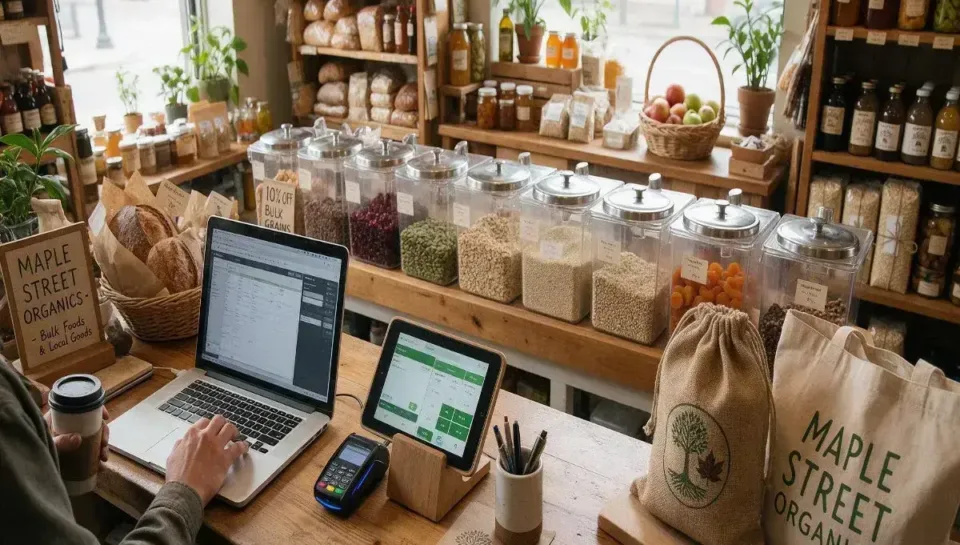
Why Organic Food Stores Need a Professional Website More Than Ever
The way people discover, research and purchase food has changed dramatically.
Customers no longer depend exclusively on physical storefronts, printed advertisements or word-of-mouth recommendations when deciding where to buy their groceries.
- They search online.
- They compare products.
- They read reviews.
- They investigate ingredients.
- They look for nutritional information.
- They check availability.
- They compare prices.
- They search for stores that match their dietary preferences and values.
For an organic food store, this shift creates a significant opportunity. A professional website can become the digital storefront that introduces customers to the business before they ever walk through the physical store. It can showcase organic products, explain sourcing practices, display product categories, answer customer questions and provide convenient ways to make purchases or enquiries. More importantly, a well-designed website can help an organic food business compete for attention in search engines.
This makes organic food store website design much more than a visual exercise. The right website can combine branding, e-commerce, content marketing, SEO, customer education and conversion-focused functionality into one powerful digital platform. For organic food stores that want to build stronger brands and reach more customers, having a professional website is increasingly becoming a business necessity rather than an optional marketing extra.
Your Digital Storefront Matters
Imagine a customer becoming interested in organic food.
They may want to find a store that sells organic vegetables, natural snacks, healthy pantry products, organic beverages or specialty foods.
Their first step may be to search online.
They may ask:
- Where can I buy organic food?
- Which organic food store has the products I need?
- Does this store sell products online?
- What organic brands do they stock?
- Can I order for delivery?
- What makes this store different?
- Are the products genuinely organic?
- Does the store offer healthy or specialty food options?
The businesses that provide clear answers have an advantage.
A professional website gives an organic food store the opportunity to answer these questions before a customer makes contact. It can introduce the brand, demonstrate expertise and make shopping easier. Instead of simply displaying an address and phone number, the website can become a complete digital shopping and information experience. It can feature product collections, educational articles, recipes, nutritional information, buying guides, promotions and online ordering.
This is particularly valuable in the organic food industry because customers often want more information before purchasing.
A strong organic grocery website design can turn that desire for information into an opportunity to build trust and generate sales.
Understanding the Industry Challenge
Organic food stores operate in a competitive and information-driven market.
Customers may have many choices when looking for healthier, natural or organic products.
Standing out requires more than simply having quality products on shelves.
Customers Want Transparency
Organic food shoppers may want to know:
- Where products come from
- How products are sourced
- What ingredients they contain
- Whether products meet particular standards
- How products should be used
- Why they are different from conventional alternatives
A website can communicate this information clearly.
Product Discovery Is Moving Online
Customers increasingly research products before purchasing.
If an organic food store cannot be found online, it may miss potential customers.
Competition Is Not Limited to Physical Stores
Organic food businesses may compete with:
- Supermarkets
- Specialty stores
- Online retailers
- Health food brands
- Direct-to-consumer businesses
- Marketplace sellers
A strong digital presence helps businesses differentiate themselves.
Customers Expect Convenience
Consumers increasingly appreciate convenient ways to:
- Browse products
- Check availability
- Place orders
- Request information
- Contact stores
- Discover promotions
Product Ranges Can Be Complex
Organic food stores may stock hundreds of products across multiple categories.
Without effective website organization, customers can struggle to find what they need.
Trust Is Essential
Customers may be cautious about claims involving organic, natural or health-oriented products.
A professional website provides an opportunity to explain sourcing, product information and brand standards in a transparent manner.
Why a Professional Website Matters for Organic Food Stores
A professional website gives an organic food store a permanent digital home.
It Builds Brand Credibility
A polished website can reinforce the perception that the business is professional and established.
It Makes Products Discoverable
Search-optimized product and category pages can help potential customers discover the store.
It Provides Product Information
Detailed product pages can answer important questions before purchase.
It Supports Online Shopping
With e-commerce functionality, customers can browse and purchase products online.
It Expands the Store’s Reach
A physical store serves customers who can visit the location.
A website can introduce the brand to a much broader online audience.
It Educates Customers
Organic food businesses can publish useful information about:
- Ingredients
- Food preparation
- Product selection
- Organic farming
- Food storage
- Recipes
- Sustainable food choices
It Creates Direct Customer Relationships
Email newsletters, contact forms and loyalty initiatives can help build stronger relationships.
It Supports Marketing Campaigns
Promotions, new products and seasonal collections can be promoted through dedicated landing pages.
Benefits of a Professional Website for Organic Food Stores
1. Increase Online Visibility
SEO can help potential customers discover the store when searching for relevant products.
2. Showcase a Wider Product Range
A website can display far more product information than traditional advertising.
3. Increase Online Sales
E-commerce functionality allows customers to purchase without visiting the physical store.
4. Generate More Store Visits
A website can encourage customers to visit the physical store when they want an in-person shopping experience.
5. Build Customer Trust
Transparent information can make customers more confident about purchasing.
6. Promote New Products
Create dedicated pages for new arrivals and product launches.
7. Promote Special Offers
Seasonal campaigns and promotions can be highlighted prominently.
8. Build an Email Audience
Encourage customers to subscribe for:
- New product updates
- Recipes
- Shopping tips
- Promotions
- Educational content
9. Improve Product Discovery
Search and category navigation can help customers find products quickly.
10. Attract New Customer Segments
A strong online presence can reach customers who have never visited the physical store.
11. Strengthen Brand Identity
The website can communicate the store’s personality, values and positioning.
12. Support Content Marketing
Useful articles can attract people searching for organic food information.
13. Generate Customer Enquiries
Clear calls to action can encourage customers to contact the business.
14. Support Customer Retention
Newsletters, loyalty initiatives and useful content can bring customers back.
15. Create a Scalable Digital Business
An e-commerce-enabled website can grow alongside the store’s product range and customer base.
Essential Website Features for Organic Food Stores
An effective organic food website design should combine visual appeal with practical functionality.
1. Professional Homepage
The homepage should immediately communicate:
- What the store sells
- What makes it different
- Who it serves
- Why customers should trust it
2. Product Catalogue
Organize products into logical categories such as:
- Fresh produce
- Pantry products
- Snacks
- Beverages
- Dairy alternatives
- Grains
- Baking products
- Natural ingredients
- Specialty foods
3. Detailed Product Pages
Each important product should provide relevant information such as:
- Product name
- Description
- Ingredients
- Size or quantity
- Brand
- Price where appropriate
- Availability
- Product photographs
- Ordering information
4. Search Functionality
Customers should be able to search for products quickly.
5. Product Filtering
Allow visitors to filter products according to relevant characteristics.
6. E-Commerce Functionality
For stores selling online, include:
- Shopping cart
- Secure checkout
- Product management
- Order management
- Payment integration
- Customer accounts where appropriate
7. Online Ordering
Make ordering straightforward and intuitive.
8. Delivery Information
Clearly explain available delivery options and relevant ordering conditions.
9. Store Information
Provide important information about the physical store where applicable.
10. About Us Page
Tell customers about the business, its story and its values.
11. Sourcing Information
Explain how products are selected and sourced.
12. Blog or Resource Centre
Publish educational content that helps customers make informed purchasing decisions.
13. Recipe Section
Recipes can encourage customers to discover and purchase relevant products.
14. Customer Reviews
Authentic customer feedback can reinforce credibility.
15. Newsletter Signup
Create opportunities to build a direct customer communication channel.
16. Mobile-Responsive Design
The website should provide an excellent experience on smartphones and tablets.
17. Strong Calls to Action
Examples include:
- Shop Organic Products
- Browse Our Products
- Order Online
- Explore New Arrivals
- Discover Healthy Food Options
- Subscribe for Updates
- Contact Us
SEO Strategy for Organic Food Stores
A professional website is most valuable when customers can actually find it.
This is where organic food store SEO becomes essential.
Search engine optimization can help businesses appear when potential customers search for products, information and solutions related to organic food.
Target High-Intent Keywords
Keyword research should identify phrases connected to actual purchasing behavior.
Examples can include:
- Organic food store
- Organic grocery store
- Buy organic food online
- Organic products online
- Natural food store
- Organic grocery delivery
- Organic products near me
The exact keyword strategy should reflect the store’s products and target audience.
Build Dedicated Product Pages
Each major product category should have an optimized page.
For example:
- Organic Pantry Products
- Organic Fresh Produce
- Organic Snacks
- Organic Beverages
This creates more opportunities for search visibility.
Optimize Product Descriptions
Product descriptions should be informative, unique and written for customers rather than copied from manufacturers.
Create Educational Content
Organic food stores have numerous content opportunities.
Articles could cover:
- How to choose organic foods
- Understanding organic food labels
- Organic food shopping guides
- How to store fresh organic produce
- Organic ingredient substitutions
- Healthy meal preparation ideas
- Organic food recipes
- Differences between food production methods
Use Recipe Content Strategically
Recipes can attract search traffic while naturally connecting readers with products sold by the store.
Optimize Images
Food photography and product images should be compressed and properly optimized.
Improve Website Speed
Fast-loading pages provide a better experience and support stronger website performance.
Create Internal Links
Link related products, articles, recipes and categories together.
For example, an article about organic baking can link directly to relevant baking ingredients.
Optimize Metadata
Each important page should have:
- A unique meta title
- A compelling meta description
- A relevant URL
- Proper headings
Build Topic Authority
Create groups of related content around major subjects such as:
Organic Food
→ Organic Food Guide
→ Benefits of Organic Food
→ Organic Shopping Guide
→ Organic Food Recipes
→ Organic Pantry Essentials
This helps create a comprehensive resource.
Optimize for Mobile Search
Customers frequently use mobile devices when researching products.
The website should therefore be easy to browse on small screens.
Monitor SEO Performance
Use appropriate analytics and search tools to monitor:
- Organic traffic
- Search queries
- Page performance
- Conversions
- Product interest
Common Website Mistakes in the Organic Food Industry
1. Treating the Website as a Digital Brochure
A modern website should actively support marketing, customer engagement and sales.
2. Having Poor Product Organization
Customers should be able to locate products without frustration.
3. Using Generic Product Descriptions
Unique, useful descriptions provide greater value.
4. Using Low-Quality Product Photography
Visual presentation matters significantly in food retail.
5. Ignoring SEO
Without search optimization, valuable product pages may receive little organic traffic.
6. Creating a Slow Website
Large product images and unnecessary website features can reduce performance.
7. Poor Mobile Experience
Customers should be able to shop comfortably from smartphones.
8. Making Checkout Complicated
Every unnecessary step can create friction.
9. Hiding Important Information
Shipping, delivery, returns, product details and contact information should be easy to find.
10. Having Weak Calls to Action
Visitors should clearly understand how they can purchase or contact the store.
11. Ignoring Content Marketing
Educational content can be an important source of organic traffic.
12. Failing to Update Products
Outdated availability information can create frustration.
13. Relying Entirely on Social Media
Social platforms are useful marketing channels, but a professional website provides greater control over the customer experience.
14. Overloading the Website With Claims
Organic and health-related messaging should be accurate, transparent and appropriately supported.
15. Neglecting Website Security
E-commerce websites in particular require appropriate security measures.
How Butterfly Prime Solutions Can Help
Butterfly Prime Solutions can help organic food stores create professional websites designed around visibility, usability, branding and business growth.
The goal is not simply to build an attractive website.
The goal is to create a digital platform that helps customers discover, understand and purchase products.
Custom Organic Food Store Website Design
Create a website tailored to the store’s identity, product range and business model.
E-Commerce Website Development
Build online shopping functionality for businesses that want to sell products digitally.
Product Catalogue Development
Organize large product ranges into intuitive categories.
Organic Food SEO
Develop SEO-friendly website structures and content strategies designed around relevant searches.
Product Page Optimization
Create product pages designed for both users and search engines.
Mobile-Responsive Design
Ensure customers receive a smooth shopping experience across devices.
Content Management Systems
Provide practical systems that make it easier to update products, articles and promotions.
Blog and Recipe Development
Create content sections that can support SEO and customer engagement.
Online Ordering
Integrate ordering functionality where appropriate.
Conversion-Focused Design
Strategically position calls to action throughout the website.
Analytics Integration
Help businesses understand how visitors interact with the website.
Digital Marketing Foundation
Build a website that can support broader marketing activities such as:
- SEO
- Content marketing
- Email marketing
- Social media campaigns
- Paid advertising
- Product promotions
Why Choose Butterfly Prime Solutions
An organic food store needs a website that balances visual appeal, product discovery, functionality and performance.
Butterfly Prime Solutions can help bring these elements together through strategic website design and development.
Professional Design
Create a polished online environment that reflects the quality and positioning of the store.
SEO-Focused Structure
Build website architecture with search visibility in mind.
Customer-Centered Navigation
Make it easier for shoppers to browse and discover products.
Conversion-Oriented Development
Encourage visitors to purchase, enquire, subscribe or visit the store.
Scalable Functionality
Build websites that can grow alongside the product catalogue and business.
E-Commerce Expertise
Create convenient online shopping experiences where online sales are part of the business model.
Content-Friendly Websites
Give organic food businesses the tools to publish recipes, guides and educational resources.
Mobile-First Experience
Ensure the website remains accessible and easy to use across devices.
Long-Term Digital Strategy
A professional website can become the foundation for broader online growth.
Butterfly Prime Solutions can help position that website as more than an online catalogue.
It can become the center of the brand’s digital ecosystem.
Frequently Asked Questions
Why does an organic food store need a professional website?
A professional website helps an organic food store showcase its products, build trust, attract search traffic, communicate its values and provide customers with convenient ways to shop or enquire.
Can an organic food store sell products online?
Yes. An e-commerce website can allow suitable products to be displayed and purchased online.
How can SEO help an organic food store?
SEO can improve visibility when potential customers search for organic foods, natural products, specialty groceries and related information.
What should an organic food store website include?
Important features can include product catalogues, detailed product pages, search, filtering, e-commerce, delivery information, recipes, educational content, contact forms and newsletter signup.
Is e-commerce necessary for every organic food store?
Not necessarily. Some stores may primarily use their websites to generate awareness and physical store visits, while others may benefit significantly from online sales.
Can an organic food website include recipes?
Yes. Recipes can provide useful content, encourage customer engagement and create opportunities to connect recipes with relevant products.
How can an organic food store build customer trust online?
Transparent product information, clear sourcing details, professional design, accurate communication, customer reviews and useful educational content can all contribute to trust.
Should an organic food store have a blog?
A blog can be valuable for publishing educational articles, recipes, buying guides and other content that can attract organic search traffic.
Why is mobile-friendly design important for an organic food store?
Many consumers research and shop from smartphones. A mobile-responsive website makes browsing and purchasing easier.
Can Butterfly Prime Solutions build an e-commerce website for an organic food store?
Yes. Butterfly Prime Solutions can develop e-commerce functionality tailored to an organic food store’s products, customers and business requirements.
Can an existing organic food website be redesigned?
Yes. An existing website can be redesigned to improve its appearance, navigation, SEO, mobile experience, performance and conversion opportunities.
How important are product images?
High-quality product photography can significantly improve presentation and help customers understand what they are considering purchasing.
Can SEO help promote individual products?
Yes. Individual product pages can be optimized around relevant search terms, provided the content is unique, useful and aligned with actual customer searches.
How can an organic food store compete with larger retailers online?
A smaller store can differentiate itself through specialized products, strong branding, useful content, expert knowledge, excellent customer experience and a focused SEO strategy.
What makes a high-converting organic food website?
A high-converting website combines clear branding, compelling product presentation, intuitive navigation, strong SEO, fast performance, mobile responsiveness, simple purchasing pathways and persuasive calls to action.