






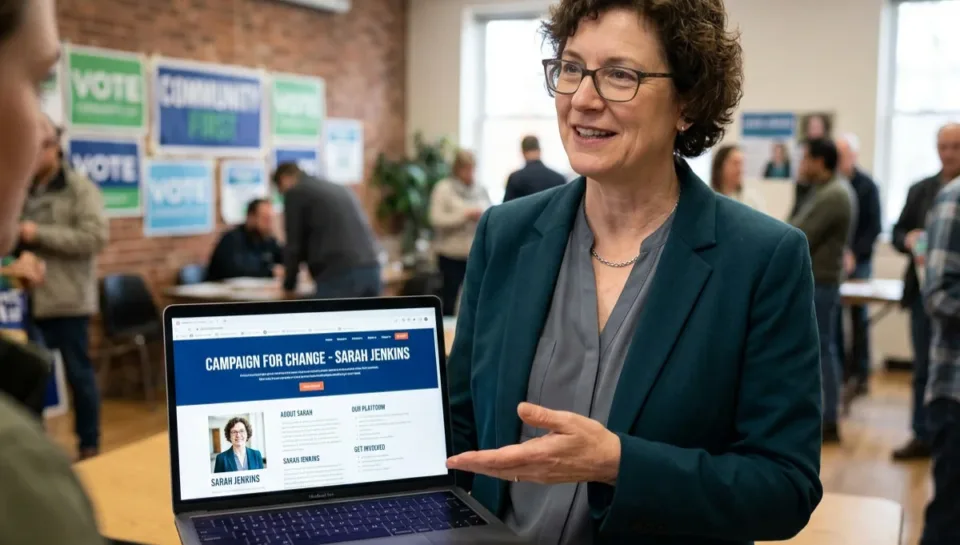
Why Political Campaigns Need Professional Websites
Modern political campaigns are no longer fought only through rallies, speeches, posters, television appearances, printed materials, or traditional media coverage.
The digital environment has become an important part of how candidates communicate, present their ideas, explain their priorities, respond to public interest, organize supporters, and establish a recognizable political identity.
When voters, journalists, supporters, community organizations, political stakeholders, or potential volunteers want to learn more about a candidate or campaign, they may begin by searching online.
That search creates a critical moment.
What will they find?
Will they encounter a professionally organized campaign website that clearly explains the candidate’s background, priorities, policies, events, announcements, and ways to participate?
Or will they have to piece information together from scattered social media posts, old articles, videos, and third-party platforms?
A professional political campaign website provides a central digital destination where campaign information can be presented clearly and consistently.
- It can function as the campaign’s digital headquarters.
- It can introduce the candidate.
- It can explain the campaign’s vision.
- It can organize policy information.
- It can publish announcements.
- It can promote events.
- It can provide media resources.
- It can recruit volunteers.
- It can facilitate supporter engagement.
And, where legally and technically appropriate, it can support permitted campaign fundraising or contribution processes.
For campaigns operating in an environment where attention is fragmented and information moves rapidly, having a professionally designed website can make the difference between a campaign that simply exists online and one that has a structured digital presence.
This is where Butterfly Prime Solutions can play a strategic role by combining professional website design, user experience, content architecture, SEO, responsive development, and conversion-focused functionality to create campaign websites designed around communication and engagement.
Understanding the Political Campaign Challenge
Political campaigns have an unusual digital challenge.
They need to communicate with many different audiences while maintaining a consistent public identity.
- A first-time visitor may want to know who the candidate is.
- A supporter may want campaign updates.
- A volunteer may be looking for opportunities to participate.
- A journalist may need an official biography or media information.
- A voter may want to understand policy positions.
- An event attendee may need details about an upcoming campaign appearance.
- A potential donor or supporter may want to understand the campaign’s priorities before deciding whether to participate.
All of these people can arrive at the same website with completely different questions.
Information Is Often Scattered Across Platforms
Campaigns frequently communicate through multiple channels:
- Social media
- Video platforms
- Messaging applications
- News coverage
- Interviews
- Printed materials
- Event announcements
- Third-party political directories
Each channel has a purpose, but relying on scattered platforms can make the campaign’s information difficult to navigate.
A professional website creates a central reference point.
Political Communication Requires Clarity
Campaign communication can involve complex subjects.
Policies, priorities, plans, professional backgrounds, public statements, campaign events, and organizational information all need to be communicated in ways that people can understand.
A poorly structured website can make important information difficult to find.
A well-designed campaign website can organize information according to what visitors actually need.
Campaign Information Changes Quickly
Political campaigns are dynamic.
New events are announced.
Statements are released.
Policies are updated.
Media appearances occur.
Campaign schedules change.
New endorsements or announcements may be published.
A website needs a content structure that makes these updates manageable.
Campaigns Compete for Digital Attention
Political audiences are exposed to an enormous amount of information.
A campaign website therefore needs to do more than exist.
It needs to capture attention, establish credibility, communicate efficiently, and provide clear pathways for visitors who want to learn more or become involved.
Why a Professional Website Matters for Political Campaigns
1. It Creates an Official Digital Headquarters
A campaign website can become the central source for official campaign information.
Rather than relying entirely on third-party platforms, the campaign can direct people toward one authoritative destination.
The website can contain:
- Candidate information
- Campaign vision
- Policy priorities
- News
- Events
- Statements
- Media resources
- Volunteer opportunities
- Contact information
- Supporter resources
This creates a much more organized digital presence.
2. It Gives the Candidate a Strong First Impression
First impressions matter in political communication.
A professionally designed website communicates that the campaign takes communication seriously.
The visual identity, structure, messaging, typography, photography, navigation, and content presentation should work together to create a coherent campaign experience.
3. It Makes Campaign Information Easier to Find
A visitor should not have to search through months of social media posts to find a candidate’s position on an important issue.
Dedicated pages can organize information logically.
For example:
Campaign → Issues → Education
Campaign → Issues → Healthcare
Campaign → Issues → Economy
Campaign → Issues → Infrastructure
This structure creates a better experience for visitors and gives search engines clearer information about the website.
4. It Gives Policy Positions Room to Breathe
Short social posts are useful for generating attention.
They are not always suitable for explaining complicated policy positions.
A website provides space for deeper explanations.
Campaigns can publish:
- Policy statements
- Issue explainers
- Position papers
- FAQs
- Background information
- Research
- Campaign commitments
This allows visitors to move beyond slogans and explore substantive information.
5. It Strengthens Candidate Discoverability
People search for political candidates, campaign issues, speeches, policies, interviews, events, and campaign announcements.
A properly structured website can create search-friendly pages around relevant topics.
This gives campaigns opportunities to appear in organic search results when people actively seek information.
Benefits of a Professional Political Campaign Website
Centralized Campaign Communication
One of the biggest advantages of a professional campaign website is centralization.
Instead of asking supporters to monitor several platforms, the campaign can maintain an official digital destination for important information.
This can reduce confusion and make campaign communication more efficient.
Stronger Candidate Branding
Political campaigns are built around recognizable identities.
A website can establish consistency across:
- Candidate photography
- Campaign messaging
- Visual identity
- Typography
- Logos
- Policy presentation
- Calls to action
- Campaign language
This creates a more unified public-facing brand.
Better Voter Information
Visitors can find information when they need it.
Rather than waiting for a campaign post to appear in a social feed, they can intentionally visit the website to explore the candidate’s positions and campaign activities.
Improved Media Accessibility
Journalists and media organizations often need reliable campaign information quickly.
A dedicated media section can provide:
- Candidate biography
- Official photographs
- Press releases
- Statements
- Media appearances
- Contact information
- Campaign announcements
- Downloadable resources
This can make the campaign easier for media professionals to cover.
More Effective Volunteer Recruitment
Supporters who want to become involved should have a clear way to do so.
A campaign website can include volunteer registration forms and explain available participation opportunities.
Possible categories may include:
- Event support
- Digital campaigning
- Community outreach
- Administrative support
- Content creation
- Communications
- Fundraising support where permitted
- Campaign logistics
Stronger Supporter Engagement
A website can become a destination for people who want to stay informed.
Newsletter registration, campaign updates, event information, resources, and other engagement mechanisms can help build a more direct relationship with supporters.
Greater Search Visibility
A social media post may generate attention for a few hours.
A well-optimized campaign article or policy page can potentially remain discoverable through search for much longer.
This makes SEO an important long-term component of political digital strategy.
Faster Campaign Updates
A properly developed content management system allows campaign teams to update announcements, events, statements, and other information without rebuilding the entire website.
This is particularly important during fast-moving campaign periods.
Essential Website Features for Political Campaigns
Campaign-Focused Homepage
The homepage should communicate the campaign’s identity immediately.
It can introduce the candidate, present key campaign information, highlight important updates, and guide visitors toward the most relevant sections.
The homepage should avoid overwhelming visitors with every piece of campaign information at once.
Instead, it should create clear pathways into the website.
Candidate Profile
A dedicated candidate page can provide a detailed professional and public biography.
It may include:
- Background
- Experience
- Education
- Professional achievements
- Public service experience
- Leadership experience
- Relevant qualifications
- Campaign motivation
The content should be factual, clear, and professionally presented.
Policy and Issues Centre
One of the most important components of a campaign website is a well-organized policy section.
Each major issue can have its own dedicated page.
This makes information easier to navigate and creates valuable opportunities for search engine optimization.
Campaign Newsroom
A campaign newsroom can publish:
- Announcements
- Statements
- Speeches
- Campaign updates
- Press releases
- News
- Event recaps
This can become the official archive of campaign communication.
Events Calendar
Campaigns can involve numerous public events.
An event section can communicate:
- Event names
- Dates
- Times
- Locations
- Descriptions
- Registration details
- Participation information
An organized event calendar makes campaign participation easier.
Volunteer Registration
A dedicated volunteer page should make participation straightforward.
Visitors should understand:
- Why volunteers are needed
- What opportunities are available
- How they can participate
- What information they need to submit
Forms should be designed carefully and securely.
Support and Contribution Functionality
Where legally permitted and appropriate, campaign websites may include functionality supporting contributions, donations, or other forms of financial participation.
Any such system should be implemented with appropriate security, privacy, payment processing, and applicable legal compliance requirements.
Campaign Newsletter
Email can provide a direct communication channel between campaigns and supporters.
A website can encourage visitors to subscribe for:
- Campaign updates
- Policy announcements
- Event information
- News
- Statements
- Campaign developments
Media Centre
A campaign media centre can serve journalists and content creators by providing organized access to official campaign material.
Candidate Photography and Video
Political communication is highly visual.
Professional photography, campaign videos, speeches, interviews, and other media can help communicate the candidate’s public identity.
However, media should be optimized carefully so it does not negatively affect website performance.
Contact and Enquiry Forms
Visitors should have a clear method for contacting the campaign.
Different forms can be used for:
- General enquiries
- Media requests
- Volunteer enquiries
- Event questions
- Partnership enquiries
Mobile-First Experience
Campaign information must be accessible across smartphones, tablets, and computers.
A mobile-friendly political campaign website is essential because many visitors will encounter campaign content through mobile devices and social platforms.
Accessibility
Campaign websites should strive to make information accessible to as many people as possible.
Clear typography, readable contrast, descriptive image text, keyboard-friendly navigation, logical page structures, and accessible forms can create a more inclusive experience.
SEO Strategy for Political Campaign Websites
Political campaign SEO requires a thoughtful approach because search queries can be highly competitive and constantly changing.
The goal is not simply to insert political keywords into pages.
The objective is to create useful, authoritative, clearly organized content that corresponds to what people are actually searching for.
Optimize for Candidate Searches
Branded search terms can include combinations of:
- Candidate name
- Candidate name + campaign
- Candidate name + policies
- Candidate name + biography
- Candidate name + speeches
- Candidate name + events
The campaign website should provide authoritative pages that address these searches.
Create Dedicated Policy Pages
Instead of placing every policy on a single page, create individual pages for major topics.
This gives each subject a stronger opportunity to rank for relevant searches.
Target Informational Search Intent
People may search questions such as:
- What does the candidate stand for?
- What are the candidate’s policy priorities?
- What is the candidate’s position on a particular issue?
- Who is the candidate?
- Where is the next campaign event?
A campaign website can answer these questions directly.
Build Issue-Based Content Clusters
A strong campaign SEO strategy can create content clusters around important public issues.
For example:
Core topic: Economic Policy
Supporting content could include:
- Economic priorities
- Small business policy
- Employment initiatives
- Economic development
- Industry policy
- Frequently asked questions
This creates a deeper information ecosystem.
Publish Original Campaign Content
Campaign websites should regularly publish original material.
This can include:
- Candidate speeches
- Policy explanations
- Official statements
- Interviews
- Educational content
- Campaign updates
- Event reports
Fresh, useful content can support discoverability while giving supporters a reason to return.
Optimize Campaign Events
Each major event can have its own page containing relevant information.
This can help visitors discover upcoming activities and allow search engines to understand event-specific content.
Use Internal Linking
Policy pages should connect to related articles.
News announcements can connect to relevant policies.
Candidate biographies can connect to speeches and achievements.
Event pages can connect to registration or volunteer opportunities.
This creates a stronger website ecosystem.
Maintain Technical SEO
Technical considerations include:
- Page speed
- Mobile responsiveness
- Crawlability
- Structured page architecture
- Metadata
- Search-friendly URLs
- Image optimization
- Secure website infrastructure
- Indexation management
A campaign website should be designed for both humans and search engines.
Common Website Mistakes in Political Campaigns
Treating the Website as a Digital Poster
A campaign website should be more than a large candidate photograph with a slogan underneath.
It should provide useful information and clear pathways for engagement.
Making the Candidate the Only Focus
The candidate is important, but visitors also need access to:
- Policies
- Events
- News
- Resources
- Volunteer opportunities
- Campaign information
The website should serve the audience as well as the campaign.
Hiding Policy Information
If visitors cannot quickly find the campaign’s positions on important issues, they may look elsewhere.
Policy information should be easy to discover and understand.
Depending Entirely on Social Media
Social media is useful for distribution.
It should not necessarily be the campaign’s only digital home.
A campaign website provides greater control over information architecture, content, search visibility, and long-term communication.
Using Outdated Information
An outdated event calendar or old campaign announcement can immediately reduce trust.
Campaign teams should establish a clear content management process.
Making the Website Difficult to Navigate
Campaign websites can accumulate large amounts of information.
Without proper information architecture, visitors may become overwhelmed.
Navigation should be simple and purposeful.
Overloading Pages With Political Slogans
Strong campaign messaging has its place.
However, visitors also need facts, explanations, policies, biographies, event information, and useful resources.
Ignoring Search Engine Optimization
Campaign websites can miss valuable search opportunities when pages are created without considering how people search for candidates, issues, policies, events, and campaign information.
Poor Mobile Performance
A website that works well on desktop but performs poorly on mobile can lose a substantial portion of its audience.
Failing to Create Clear Next Steps
Every major section should guide visitors toward an appropriate action.
For example:
- Explore the policies.
- Read the latest campaign news.
- Attend an event.
- Volunteer.
- Subscribe for updates.
- Contact the campaign.
Clear calls to action make the website more useful.
How Butterfly Prime Solutions Can Help
A political campaign website requires a combination of strategy, design, technology, content organization, and search optimization.
Butterfly Prime Solutions can help campaigns turn those requirements into a structured digital platform.
Strategic Campaign Website Planning
The website should begin with campaign objectives rather than design trends.
Butterfly Prime Solutions can help structure the website around:
- Candidate positioning
- Audience needs
- Campaign messaging
- Policy communication
- Content strategy
- Engagement goals
- Search visibility
- Campaign updates
Professional Political Website Design
A political campaign website needs a professional visual identity that supports the campaign’s public positioning.
Butterfly Prime Solutions can develop a design that is:
- Professional
- Responsive
- User-friendly
- Visually consistent
- Content-focused
- Easy to navigate
Candidate-Focused Information Architecture
Campaign websites can become complicated quickly.
Butterfly Prime Solutions can structure candidate information, policy content, news, events, media, volunteer opportunities, and other resources into an intuitive hierarchy.
SEO-Friendly Campaign Development
Search engine optimization can be incorporated into the website architecture from the beginning.
This includes strategic page structures, keyword opportunities, internal linking, metadata, search-friendly URLs, content architecture, and technical performance.
Campaign Content Architecture
Political websites need to accommodate different types of content.
Butterfly Prime Solutions can help structure:
- Policy pages
- News articles
- Candidate biographies
- Speeches
- Events
- Media resources
- Campaign announcements
- Educational content
This makes the website easier to maintain as campaign activity increases.
Engagement-Focused Functionality
A campaign website should make participation straightforward.
Depending on the campaign’s objectives and applicable requirements, functionality may include:
- Volunteer forms
- Newsletter subscriptions
- Event registration
- Contact forms
- Media enquiries
- Supporter engagement
- Approved contribution functionality
Mobile-Responsive Development
Campaign audiences can access websites from a wide range of devices.
Butterfly Prime Solutions can build responsive experiences designed to work across mobile, tablet, and desktop environments.
Scalable Campaign Websites
Campaigns generate content rapidly.
A scalable website structure allows teams to continue adding:
- New announcements
- Policy pages
- Events
- Speeches
- Videos
- Articles
- Campaign updates
without creating an increasingly confusing website.
Why Choose Butterfly Prime Solutions
Political campaigns need websites that communicate clearly under pressure.
Butterfly Prime Solutions approaches campaign website development as a strategic digital communication project rather than simply a design assignment.
Strategy-Led Website Development
The website structure is built around objectives, audiences, content, and engagement rather than visual appearance alone.
Professional Digital Positioning
A campaign website should reflect the seriousness and professionalism of the candidate and campaign organization.
SEO From the Foundation
Search optimization can be incorporated into the website’s structure instead of being treated as an afterthought.
Clear Information Architecture
Policies, candidate information, campaign news, events, media resources, and participation opportunities should be easy to locate.
Responsive User Experience
Visitors should be able to access campaign information conveniently across different devices.
Content Management
Campaign websites need to evolve quickly.
A well-planned content management structure makes it easier for campaign teams to keep information current.
Designed for Engagement
The website should not merely tell visitors about the campaign.
It should give them meaningful ways to explore, participate, subscribe, enquire, attend, volunteer, or otherwise engage where appropriate.
Frequently Asked Questions
Why does a political campaign need a website?
A political campaign website provides a centralized digital platform for communicating candidate information, campaign priorities, policies, news, events, media resources, and supporter opportunities.
What should a political campaign website include?
Important components can include a campaign homepage, candidate biography, policy pages, campaign news, events calendar, volunteer registration, media centre, contact forms, newsletter signup, and other campaign-specific functionality.
Can a political campaign website improve online visibility?
Yes. An SEO-friendly campaign website can create opportunities to appear in searches related to the candidate, campaign, policies, issues, events, speeches, and other relevant subjects.
Should political campaigns have dedicated policy pages?
Yes. Dedicated policy pages make important information easier to find and allow campaigns to explain individual issues in greater depth.
Can a campaign website include volunteer registration?
Yes. Volunteer registration functionality can allow supporters to express interest and provide relevant information to the campaign.
Can political campaign websites accept donations?
Depending on the jurisdiction and campaign circumstances, websites may support permitted contributions or donations. Any such functionality should be implemented with appropriate legal, privacy, security, and payment-processing requirements in mind.
Why is mobile responsiveness important for campaign websites?
Many people access online campaign information through smartphones. A mobile-responsive website ensures that campaign content remains readable, navigable, and usable across different screen sizes.
Can a campaign website include videos and speeches?
Yes. Campaign websites can include speeches, interviews, campaign videos, media appearances, and other relevant multimedia content.
How can SEO help a political campaign?
Political campaign SEO can improve the discoverability of candidate information, policy pages, campaign announcements, educational content, event pages, and other relevant website resources.
How often should a political campaign website be updated?
Campaign websites should be updated whenever important information changes. During active campaign periods, frequent updates may be necessary for events, announcements, statements, policies, media appearances, and campaign news.
Can Butterfly Prime Solutions build a custom political campaign website?
Yes. Butterfly Prime Solutions can develop a custom political campaign website based on the campaign’s communication objectives, content requirements, user journeys, SEO strategy, visual identity, and required functionality.