






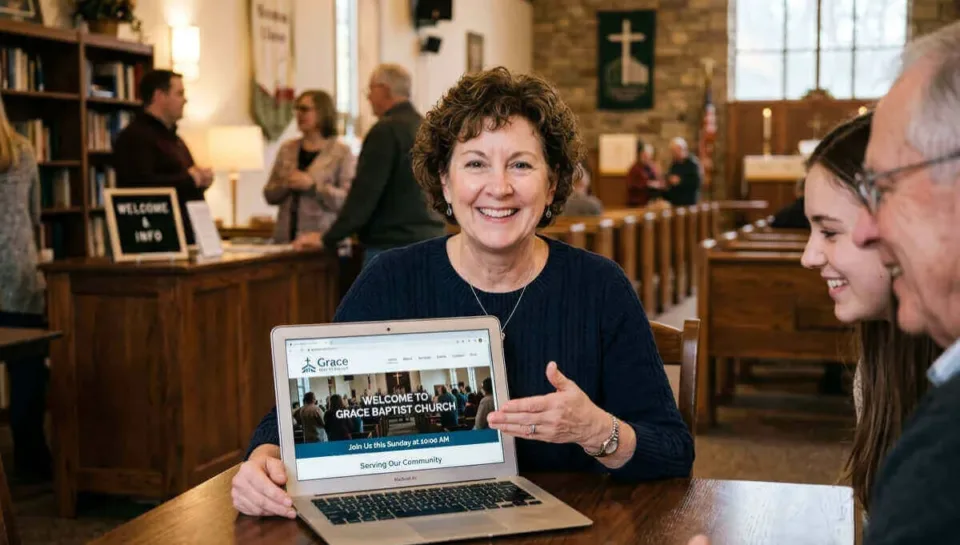
Why Every Church Needs a Professional Website
A church may have a powerful message, dedicated leaders, active ministries, inspiring services, and a vibrant community, but none of that matters as much to someone who cannot easily discover or understand the church online.
Today, the journey to a church often begins before a person ever walks through its doors.
Someone may search for a church online after moving to a new area. A parent may look for a church with children’s ministries. A young adult may want to discover a welcoming community. A family may search for service times. A potential visitor may want to know what to expect before attending for the first time. A member may need information about an upcoming event, sermon, ministry, or giving opportunity.
In many of these situations, the church website becomes the first major point of contact.
This makes professional church website design far more important than simply having a page with an address, phone number, and service schedule.
A well-designed church website can become a digital welcome center, communication hub, ministry platform, outreach tool, content library, event resource, giving channel, and community connection point.
For churches seeking to expand their reach and strengthen their digital ministry, a professionally developed website provides a foundation on which many other digital activities can grow.
That is where Butterfly Prime Solutions comes in.
With strategic website planning, conversion-focused design, SEO-friendly development, responsive layouts, and thoughtful content architecture, Butterfly Prime Solutions can help churches create digital experiences that communicate their mission clearly while making it easier for visitors and members to connect.
Understanding the Digital Challenge Facing Churches
The modern church is no longer communicating only through physical spaces.
Churches now operate within a digital environment where people discover organizations, evaluate communities, consume content, communicate with others, and make decisions online.
This creates several challenges.
People Research Churches Before Visiting
A potential visitor may want answers before attending a service.
They may ask:
- What does this church believe?
- When are the services?
- Is there children’s ministry?
- Is there youth ministry?
- What should I expect when I visit?
- Is the church welcoming to families?
- Where is the church located?
- Are sermons available online?
- Does the church have small groups?
- Can I contact someone?
- What programs are available?
If these answers are difficult to find, the visitor may simply move on.
A professional church website gives the church an opportunity to answer these questions before the first physical interaction.
Social Media Alone Is Not Enough
Social media can be useful for announcements, photographs, short videos, event promotions, and community interaction.
However, social platforms are not a complete digital home for a church.
Posts can disappear quickly in busy feeds. Important information can become difficult to find. Visitors may have to scroll through months of content to understand the church.
A website provides a structured and permanent destination where important information can remain accessible.
Churches Have Multiple Audiences
A church website must communicate with more than one group.
It may need to serve:
- First-time visitors
- Existing members
- Families
- Young adults
- Parents
- Children and youth
- Volunteers
- Ministry leaders
- Community members
- Donors and supporters
- People seeking spiritual resources
- People watching services remotely
Professional church website development should therefore focus on creating clear pathways for different audiences rather than treating every visitor identically.
Information Can Become Difficult to Manage
Churches frequently have numerous activities happening at once.
There may be worship services, conferences, Bible studies, youth programs, children’s activities, prayer meetings, community initiatives, small groups, outreach programs, workshops, and special events.
Without a strong website structure, this information can become confusing.
A strategic church website organizes information so visitors can find what they need without unnecessary searching.
Why a Professional Website Matters for Every Church
A church website should not be viewed as a digital brochure.
It can become one of the church’s most important communication and outreach assets.
Your Website Becomes a Digital Welcome Center
A physical church building can welcome visitors when its doors are open.
A website can provide that first welcome at any time.
Visitors can learn about the church, explore ministries, watch sermons, read its story, find service information, and discover upcoming events whenever they are ready.
This makes a professional church website an extension of the church’s welcoming experience.
It Makes the Church Easier to Discover
Search engines have become an important part of how people find organizations.
Someone may search for:
- church near me
- churches with youth ministry
- family church
- Sunday church services
- church Bible study
- Christian church services
- churches with children’s ministry
- church prayer meetings
- Christian community
- church livestream
A properly structured website gives search engines useful information about the church and its ministries.
This creates opportunities for church SEO and organic search visibility.
It Communicates the Church’s Mission
A church should be able to explain its identity clearly online.
The website can communicate:
- Mission
- Vision
- Values
- Beliefs
- Ministries
- Community activities
- Leadership
- Outreach initiatives
- Worship opportunities
- Educational resources
This gives visitors a much clearer understanding of what the church represents.
It Supports Digital Ministry
Ministry does not necessarily begin or end inside the church building.
A website can distribute sermons, devotionals, Bible studies, articles, videos, podcasts, prayer resources, announcements, and educational materials.
This allows the church’s message to reach people who may not yet be ready to attend physically.
It Strengthens Communication With Members
Members need reliable access to information.
Instead of relying entirely on announcements during services or messages spread across different communication channels, the church can use its website as a central information source.
Members can find:
- Events
- Announcements
- Ministry information
- Sermons
- Calendars
- Resources
- Registration forms
- Giving information
- Contact details
Benefits of a Professional Church Website
A professionally designed website can deliver benefits that extend far beyond appearance.
1. Increased Online Visibility
A strategically built website gives the church a stronger opportunity to appear in relevant search results.
Through church website SEO, optimized content, structured pages, internal linking, technical optimization, and search-focused content, churches can build long-term organic visibility.
2. Stronger First Impressions
People make rapid judgments about organizations based on their digital experiences.
A modern website can communicate organization, professionalism, clarity, warmth, and credibility.
For someone discovering a church for the first time, that first impression can influence whether they continue exploring.
3. Easier Visitor Decision-Making
A visitor should not have to work hard to determine whether a church may be right for them.
The website can clearly answer essential questions and provide obvious next steps.
This reduces uncertainty and makes visiting easier.
4. Better Member Engagement
Members can use the website to remain connected with church activities and resources.
Regularly updated content can keep people informed even when they are unable to attend physically.
5. Greater Reach for Sermons and Ministry Content
A sermon delivered to a physical congregation has a limited immediate audience.
Publishing sermons online creates opportunities for that content to reach a much wider audience.
The same principle applies to:
- Devotionals
- Bible studies
- Podcasts
- Articles
- Teaching resources
- Videos
- Testimonies
6. Stronger Event Promotion
A church may spend considerable effort organizing an event.
A dedicated event page can provide:
- Event details
- Date and time
- Location
- Speakers
- Registration
- Frequently asked questions
- Contact information
- Promotional media
This gives every event a dedicated digital destination.
7. Improved Giving Opportunities
Churches can make giving information easier to find through dedicated website pages and secure integrations.
A professional church donation website experience can clearly explain giving options while making the process simple and accessible.
8. Better Community Outreach
Church websites can highlight community initiatives and outreach programs.
This allows people outside the existing congregation to discover how the church serves its wider community.
9. Long-Term Digital Asset
Social media posts have short lifespans.
A website can continue attracting visitors through search engines months and years after content is published.
This makes a well-maintained website a long-term digital asset rather than a temporary promotional channel.
10. Centralized Information
A strong website can bring multiple communication needs together.
Instead of scattering information across different platforms, the website can become the central digital reference point for the church.
Essential Website Features for Churches
A professional church website design should combine spiritual communication, visitor experience, content management, accessibility, and practical functionality.
1. A Welcoming Homepage
The homepage should immediately communicate:
- Who the church is
- What it believes
- When people can attend
- What visitors can expect
- How people can connect
The design should feel welcoming without becoming visually overwhelming.
2. Clear Service Information
Service information should be easy to locate.
Include:
- Service times
- Worship information
- Location details
- What visitors should expect
- Contact information
- Online service options where applicable
3. About the Church
A strong About page can introduce the church’s:
- History
- Mission
- Vision
- Values
- Beliefs
- Leadership
- Community
4. Ministry Pages
Every major ministry should have its own dedicated page where appropriate.
Examples include:
- Children’s ministry
- Youth ministry
- Women’s ministry
- Men’s ministry
- Worship ministry
- Prayer ministry
- Missions
- Community outreach
- Small groups
- Bible study
Dedicated pages are also valuable from an SEO perspective because they allow search engines to understand the church’s individual areas of activity.
5. Pastor and Leadership Profiles
Leadership profiles can humanize the organization.
Profiles may include:
- Names
- Roles
- Short biographies
- Ministry experience
- Photos
- Areas of responsibility
6. Sermon Library
A church sermon website can organize sermons by:
- Speaker
- Topic
- Series
- Date
- Scripture
- Format
This turns the website into an ongoing educational resource.
7. Events Calendar
An integrated event calendar can make upcoming activities easier to discover.
Visitors should be able to quickly identify what is happening and when.
8. Online Registration
Churches can use registration functionality for:
- Conferences
- Classes
- Retreats
- Youth activities
- Children’s programs
- Workshops
- Community events
9. Donation and Giving Functionality
A professional website can provide a dedicated giving section connected to appropriate secure payment or giving systems.
10. Livestream Integration
Churches offering online services can integrate livestream platforms directly into their website.
This creates a central destination for online worship.
11. Testimonials and Stories
Authentic stories can help visitors understand the church community.
These might include:
- Member testimonies
- Transformation stories
- Ministry stories
- Community impact
- Volunteer experiences
12. Contact and Connection Forms
Visitors should have easy ways to ask questions or request contact.
Forms can support:
- General enquiries
- Prayer requests
- Ministry questions
- Visitor follow-ups
- Volunteer interest
- Membership enquiries
13. Mobile-Friendly Design
Many visitors will access the website from smartphones.
A responsive church website should work effectively across:
- Smartphones
- Tablets
- Laptops
- Desktop computers
14. Church Resources Center
A resources section can contain:
- Devotionals
- Bible study materials
- Articles
- Sermons
- Podcasts
- Videos
- Downloadable resources
This can also become an important SEO content hub.
15. Frequently Asked Questions
A church FAQ section can answer practical questions before visitors contact the church.
This improves the visitor experience while also creating opportunities to capture question-based searches.
SEO Strategy for Churches
Having a website does not automatically mean people will find it.
The site needs a deliberate church SEO strategy.
Build Pages Around Search Intent
Different people search with different intentions.
Someone searching “church service times” needs different information from someone searching “how to join a church.”
The website should address informational, navigational, and action-oriented searches.
Create Dedicated Ministry Pages
Instead of placing every ministry on one generic page, churches can create detailed pages for major programs.
This provides more useful information for visitors and creates additional search opportunities.
Develop Educational Content
A church blog can answer questions people are already searching for.
Possible topics include:
- How to start reading the Bible
- What to expect when visiting a church
- How to find a church community
- Why Christian community matters
- Bible study guides
- Prayer resources
- Family faith resources
- Christian leadership
- Youth ministry resources
Build Topic Clusters
A strong church content strategy can organize related content into clusters.
For example, a church could create a central resource around prayer and connect it with articles covering:
- How to pray
- Prayer for families
- Prayer for difficult seasons
- Bible verses about prayer
- Developing a prayer routine
- Group prayer
- Prayer and spiritual growth
Internal links connect these resources and create a stronger information structure.
Optimize Sermon Content
Sermons can generate significant amounts of useful content.
Instead of uploading only an audio file, churches can add:
- Sermon title
- Speaker
- Scripture
- Summary
- Key lessons
- Transcript where available
- Related resources
This creates additional searchable content.
Optimize Website Structure
SEO-friendly architecture should include:
- Clear URLs
- Logical navigation
- Descriptive page titles
- Proper headings
- Internal links
- Optimized images
- Fast-loading pages
- Mobile responsiveness
- Search-friendly content
Focus on Long-Tail Searches
Highly specific searches can reveal strong user intent.
For example:
“church with youth ministry”
may be more useful to a church than attempting to rank for a broad term such as “church.”
A well-planned church website SEO strategy should target a mixture of broad and specific searches.
Common Website Mistakes Churches Should Avoid
1. Treating the Website Like a Digital Noticeboard
A website should do more than display announcements.
It should help people discover, understand, connect, participate, and engage.
2. Hiding Service Times
Service information should be immediately accessible.
A first-time visitor should never have to search through multiple pages to determine when services take place.
3. Putting Everything on One Page
One enormous page containing ministries, events, sermons, history, contact information, and announcements can quickly become difficult to navigate.
Dedicated pages create a cleaner experience.
4. Using Outdated Information
Old events, expired announcements, previous service schedules, and outdated leadership information can damage credibility.
A website should have a clear content maintenance process.
5. Focusing Too Much on Internal Language
Churches sometimes use terminology that long-term members understand but newcomers may not.
Website content should remain accessible to people who are completely unfamiliar with the church.
6. Ignoring Mobile Visitors
A beautiful desktop website can still fail if it performs poorly on mobile devices.
7. Relying Only on Social Media
Social media should support the church website rather than replace it.
8. Making Visitors Guess What to Do Next
Every major page should offer a logical next step.
That might be:
- Visit
- Contact
- Register
- Watch
- Read
- Give
- Join
- Learn more
9. Neglecting Search Engine Optimization
A website can look excellent while remaining difficult for search engines to understand.
SEO needs to be considered during content planning, design, development, and ongoing maintenance.
10. Overloading the Website With Information
More information does not automatically create a better website.
The objective is to present the right information in the right place at the right time.
How Butterfly Prime Solutions Can Help
Creating an effective church website requires more than selecting a template and adding photographs.
It requires understanding the people who will use the website and designing the digital experience around their needs.
Butterfly Prime Solutions can help churches develop websites that combine professional design, usability, content strategy, SEO, and functionality.
Strategic Website Planning
Before development begins, the website structure should be carefully planned.
This includes determining:
- Core audiences
- Main visitor journeys
- Important ministries
- Content categories
- Conversion points
- Navigation structure
- SEO opportunities
Custom Church Website Design
Rather than forcing every church into the same digital template, Butterfly Prime Solutions can create a website structure aligned with the church’s identity and communication objectives.
Visitor-Focused User Experience
A first-time visitor should be able to understand the church quickly.
Butterfly Prime Solutions can organize content around practical visitor questions and create clear pathways toward engagement.
SEO-Friendly Church Website Development
SEO can be integrated into the website architecture from the beginning.
This includes:
- Search-focused page structures
- Keyword targeting
- Content hierarchy
- Technical SEO foundations
- Internal linking
- Mobile optimization
- Search-friendly URLs
- Content expansion opportunities
Ministry Content Architecture
A church may have dozens of content types.
Butterfly Prime Solutions can help structure them into an organized system that makes information easier to find.
Sermon and Resource Integration
Churches can build content libraries around sermons, videos, podcasts, articles, devotionals, and educational resources.
Event and Registration Functionality
The website can be structured to make events easier to promote and registration easier to manage.
Giving and Donation Integration
Where appropriate, churches can integrate secure third-party giving solutions into their website experience.
Mobile-First Development
A modern church website should provide a smooth experience regardless of the device being used.
Ongoing Website Growth
A church website should evolve alongside the ministry.
New ministries, campaigns, events, resources, sermons, and initiatives can continuously expand the website’s usefulness and search visibility.
Why Choose Butterfly Prime Solutions?
Strategy Before Design
A strong website begins with a strong strategy.
Butterfly Prime Solutions focuses on understanding what the website needs to accomplish before moving into visual development.
Design and SEO Working Together
Design attracts attention.
SEO helps people discover the website.
Content gives visitors a reason to stay.
Butterfly Prime Solutions brings these elements together rather than treating them as disconnected activities.
Conversion-Focused Digital Experiences
For a church, conversion does not necessarily mean selling a product.
It can mean helping someone:
- Plan a visit
- Watch a sermon
- Join a ministry
- Register for an event
- Submit a prayer request
- Contact the church
- Volunteer
- Give
- Explore resources
The website can therefore be designed around meaningful engagement.
Scalable Website Architecture
Churches grow and their digital needs change.
A website should be capable of supporting new ministries, new content categories, new events, new resources, and new digital initiatives.
Professional Brand Presentation
A church website should reflect the character and professionalism of the organization it represents.
Butterfly Prime Solutions can help create a polished digital identity that remains authentic to the church.
Built for Long-Term Digital Growth
The objective should not simply be to launch a website.
The objective should be to create a digital foundation that can continue attracting visitors, distributing content, supporting communication, and strengthening engagement over time.
Frequently Asked Questions
1. Why does a church need a professional website?
A church needs a professional website to communicate its mission, help visitors discover important information, share ministry resources, promote events, support members, improve online visibility, and establish a central digital presence.
2. What should a church website include?
Important features can include service information, About pages, ministry pages, leadership profiles, sermon libraries, event calendars, registration forms, giving functionality, contact forms, livestream integration, testimonials, FAQs, and resource centers.
3. How much does church website design cost?
The cost varies depending on the website’s size, functionality, integrations, design requirements, content needs, and ongoing development requirements.
4. Can a church website help attract new visitors?
Yes. A well-designed website can make it easier for potential visitors to discover the church, understand its ministries, answer common questions, and take the next step toward attending.
5. Does church SEO really matter?
Yes. Church SEO can improve the likelihood that people searching for relevant church services, ministries, resources, and Christian content discover the organization’s website.
6. Can a church publish sermons on its website?
Absolutely. Churches can create dedicated sermon libraries containing audio, video, summaries, transcripts, Scripture references, and related resources.
7. Can a church accept donations through its website?
Yes. A church website can integrate appropriate secure online giving platforms, allowing visitors and members to access giving options conveniently.
8. Should a church website be mobile-friendly?
Definitely. A significant portion of website visitors may access church information using smartphones. Responsive design ensures the website remains usable across different screen sizes.
9. Can a church website support online services?
Yes. Livestream platforms and video services can be integrated into a church website, creating a central destination for online worship and digital ministry.
10. Can a church website improve member communication?
Yes. A website can centralize announcements, events, ministry information, resources, registration forms, sermons, and other important communications.
11. Does a church need a blog?
A blog is not mandatory, but regularly publishing useful content can strengthen the church’s educational mission and create additional opportunities for organic search visibility.
12. Can Butterfly Prime Solutions redesign an existing church website?
Yes. A church with an outdated website can benefit from a strategic church website redesign focused on modern UX, mobile responsiveness, SEO, content organization, functionality, and stronger visitor engagement.
13. How can a church improve its online presence?
A church can strengthen its online presence through a professional website, SEO, useful content, social media integration, sermon publishing, event promotion, online resources, email communication, and consistent digital engagement.
14. Can a church website help people outside the congregation?
Yes. A website can make sermons, educational resources, devotionals, community initiatives, and other ministry content available to people who may never have encountered the church physically.
15. Why should a church work with a professional web design company?
A professional web design company can bring together strategy, UX design, SEO, development, content structure, integrations, mobile optimization, performance, and ongoing website growth into a cohesive digital solution.