





Why Bars Need a Professional Website More Than Ever
The modern bar is no longer competing only for attention on the street.
Customers can discover a bar through social media, search engines, online recommendations, food and lifestyle platforms, event listings, digital advertisements, influencers, review platforms, or word of mouth. Before deciding where to spend their evening, they may research several venues, compare menus, look at photographs, check upcoming events, explore the atmosphere, and decide whether the experience matches what they are looking for.
That makes the digital presence of a bar increasingly important.
A customer might see an attractive cocktail on Instagram and immediately search for the bar. Another might search for a place to meet friends. Someone planning a celebration may be looking for private seating or group reservations. A customer interested in live entertainment may search for bars hosting events that weekend.
In all these situations, a professional website can become one of the most valuable assets a bar has.
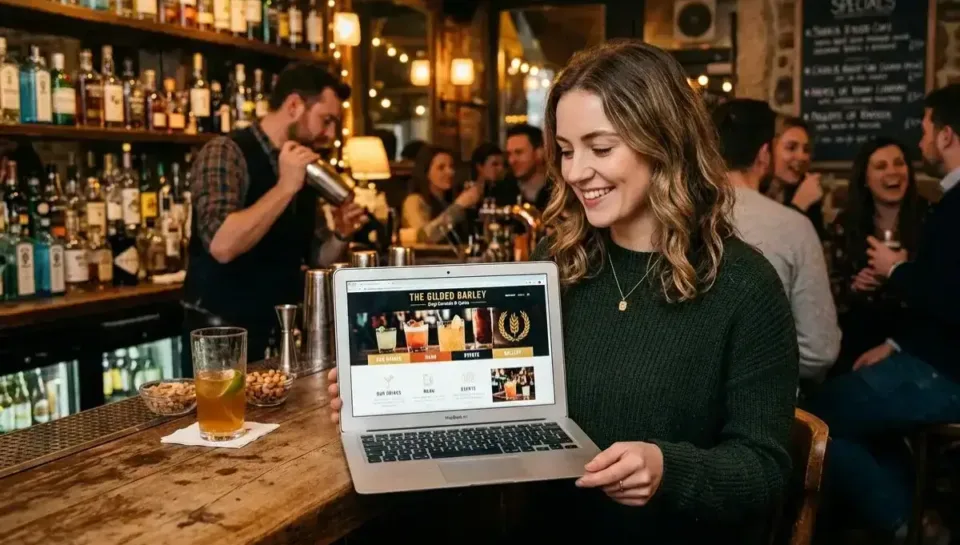
A well-designed bar website does much more than display an address and phone number. It can introduce the brand, showcase the menu, promote events, communicate the atmosphere, generate reservations, support online marketing, capture enquiries, improve search visibility, and guide customers toward visiting the venue.
Social media remains an important marketing channel, but a bar should not depend entirely on platforms it does not control. Social networks are excellent for generating attention, while a website provides a permanent digital destination where the business can present its brand and information exactly as intended.
This is why professional bar website design matters more than ever.
With the right strategy, Butterfly Prime Solutions can help bars transform their websites from basic information pages into sophisticated digital marketing platforms designed to attract, engage, and convert customers.
Understanding the Industry Challenge
The bar industry is highly experience-driven.
Customers are not simply choosing a location where they can purchase beverages. They are choosing an atmosphere, a social environment, a menu, a music experience, a service style, and often a place where they can create memories.
This makes digital presentation particularly important.
A potential customer cannot experience the physical bar before visiting it. The website therefore has to provide a digital preview of what the venue offers.
Customers have more choices than ever
People can choose between:
- Cocktail bars
- Sports bars
- Wine bars
- Pubs
- Rooftop bars
- Lounge bars
- Hotel bars
- Live music bars
- Craft beverage venues
- Entertainment venues
- Restaurant-bars
- Specialty bars
A bar needs a clear identity to stand out.
Social media information can be fragmented
Important information may be spread across different posts.
A menu might appear in one post. An event announcement may appear in another. Opening hours may be listed somewhere else. Customers may then need to send a direct message for reservation information.
This creates friction.
A professional website can bring all of that information together.
Customers increasingly research before visiting
The decision to visit a bar may begin long before the customer arrives.
They may want to know:
- What does the bar look like?
- What is on the menu?
- What type of atmosphere does it offer?
- Are reservations available?
- Are there special events?
- What entertainment is scheduled?
- What are the opening hours?
- Is there outdoor seating?
- Does the venue accommodate groups?
- How can they make a booking?
A strong website can answer these questions immediately.
Bars need more than visibility they need conversion
Getting someone to discover a bar is only the first step.
The website should encourage the visitor to take action.
That action could be:
- View Menu → Visit
- Explore Events → Book
- See Venue → Reserve
- Discover Cocktails → Plan a Visit
- Find Location → Get Directions
Professional web design connects discovery with action.
Why a Professional Website Matters for Bars
A professional website gives a bar greater control over its digital identity and customer journey.
Instead of sending every potential customer to a social media profile, the business can direct them toward a dedicated online experience.
1. A website establishes a permanent digital presence
Social platforms change constantly.
A website gives the bar a stable online destination where important information can remain accessible.
The website can contain:
- About the bar
- Menus
- Events
- Reservations
- Gallery
- Entertainment
- Promotions
- Contact information
- Opening hours
- Location details
- Private bookings
- Blog or news content
This creates a centralized digital home for the brand.
2. Your website can communicate atmosphere
A bar’s personality matters.
A sophisticated cocktail lounge should not look like a sports pub.
A modern craft bar should not look like a traditional entertainment venue.
A professional bar website designer can use visual elements to communicate the experience through:
- Photography
- Typography
- Layout
- Animation
- Video
- Branding
- Content
- Navigation
The objective is to make the website feel like an extension of the physical venue.
3. Menus become easier to discover
A website can provide a dedicated digital menu that customers can access before visiting.
This can be especially useful for customers who want to:
- Explore drinks
- Review food options
- Discover signature cocktails
- Check specialty items
- Understand pricing
- Plan group visits
A well-structured menu page can also be optimized for search engines.
4. Websites make reservations easier
If the bar accepts reservations, the process should be simple.
A customer should not have to scroll through social media posts searching for a booking number.
A professional bar reservation website can provide clear booking options and relevant information.
5. Websites support event marketing
Bars frequently host:
- Live music
- DJ nights
- Quiz nights
- Sports screenings
- Comedy nights
- Themed evenings
- Private functions
- Seasonal celebrations
- Food and beverage events
Each major event can be promoted through a dedicated website page.
6. A website supports Google visibility
Social media posts are valuable, but a website provides far more opportunities for structured search engine optimization.
The bar can target searches related to:
- Bars
- Cocktails
- Live music
- Events
- Private bookings
- Dining
- Nightlife
- Entertainment
A strong bar SEO strategy can help potential customers discover the business when they are actively searching.
Benefits of a Professional Website for Bars
Professional bar web design can contribute to multiple areas of business growth.
Increased Online Visibility
Search-optimized pages can help the bar appear in relevant search results.
Stronger Brand Recognition
A professionally designed website reinforces the visual identity of the bar.
More Reservations
Clear booking pathways can reduce friction and encourage customers to reserve tables.
Better Event Promotion
Dedicated event pages make it easier to promote upcoming entertainment and activities.
Improved Customer Experience
Customers can find menus, hours, events, reservations, and contact details in one location.
Greater Marketing Flexibility
The website can serve as the destination for social media campaigns, advertising, email campaigns, influencer promotions, and search traffic.
Increased Trust
A polished online presence can make a bar appear more established and professional.
Better Customer Communication
Important announcements, menu changes, event details, promotions, and venue updates can be published directly.
Higher-Value Opportunities
Private event pages, VIP experiences, group bookings, and corporate enquiries can help bars attract more valuable bookings.
Long-Term Digital Asset
Unlike individual social media posts, a website can continue generating value for the business over a long period.
Essential Website Features for Bars
A successful bar website development project should be built around the needs of both the customer and the business.
1. Engaging Homepage
The homepage should quickly communicate:
- Who you are
- What type of bar you operate
- What makes the venue different
- What is happening now
- What customers should do next
Strong calls-to-action could include:
- View Menu
- Book a Table
- See Upcoming Events
- Explore the Bar
2. Digital Menu
A dedicated menu section allows visitors to explore offerings before arriving.
Depending on the bar, this could include:
- Cocktails
- Mocktails
- Spirits
- Wine
- Beer
- Signature drinks
- Food
- Snacks
- Desserts
- Seasonal offerings
The menu should be easy to update and accessible from mobile devices.
3. Online Reservation System
A professional bar booking website can incorporate reservation functionality.
Customers could select or request:
- Date
- Time
- Number of guests
- Seating preferences
- Special requests
- Event reservations
4. Events Calendar
An events calendar can become a central part of the website.
Visitors can see upcoming entertainment without searching through multiple social media posts.
5. Individual Event Pages
Major events should have dedicated pages containing:
- Event title
- Date
- Time
- Description
- Performers
- Booking details
- Venue information
- Promotional imagery
- Reservation CTA
This also creates valuable SEO landing pages.
6. Photo Gallery
High-quality photographs can show customers what to expect.
The gallery can showcase:
- Interior design
- Seating areas
- Bar area
- Cocktails
- Food
- Events
- Entertainment
- Outdoor spaces
- Special occasions
7. Video Content
Video can provide an even stronger preview of the venue.
Examples include:
- Venue walkthroughs
- Event highlights
- Cocktail preparation
- Live performances
- Customer experiences
- Behind-the-scenes content
8. Private Events and Group Bookings
Bars can dedicate a page to private functions.
Potential offerings include:
- Birthday celebrations
- Corporate events
- Group gatherings
- Private parties
- Celebrations
- Networking events
9. Promotions Section
Promotions can be displayed without relying exclusively on social media.
This could include:
- Happy-hour promotions
- Seasonal offers
- Special menus
- Event packages
- Group offers
- Membership benefits
10. Mobile-First Experience
Customers frequently search for bars from smartphones.
The website should therefore provide an excellent mobile experience.
Menus, maps, booking buttons, event information, and contact details should be easy to access with minimal scrolling.
11. Location and Directions
The website should make it simple for customers to find the venue.
This can include:
- Address
- Interactive map
- Directions
- Contact information
- Opening hours
- Parking information where applicable
12. Customer Reviews and Testimonials
Authentic customer feedback can provide additional social proof.
Testimonials can reinforce the bar’s reputation and help new visitors feel more confident about choosing the venue.
13. Social Media Integration
Social media can remain a major part of the marketing ecosystem.
The website can connect customers to the bar’s active social platforms while providing the deeper information that social media often cannot organize effectively.
14. Newsletter Signup
Email marketing can help bars stay connected with previous and prospective customers.
Subscribers can receive:
- Upcoming events
- New menu announcements
- Promotions
- Special experiences
- Seasonal campaigns
15. Contact and Enquiry Forms
Simple enquiry forms can help bars manage requests for:
- Reservations
- Private events
- Group bookings
- Partnerships
- General enquiries
SEO Strategy for Bars
A beautiful website needs visibility.
This is where strategic bar SEO becomes essential.
The objective is to help the bar appear when potential customers are searching for relevant experiences.
Target Commercial Search Terms
A bar’s keyword strategy can include phrases such as:
- bar near me
- best bars
- cocktail bar
- sports bar
- wine bar
- live music bar
- pub
- lounge bar
- bar for private events
- bar reservations
- cocktail menu
- bar events
- nightlife venue
The exact strategy should reflect the bar’s positioning and target market.
Create Dedicated Service and Experience Pages
Instead of placing every piece of information on one page, a bar can create dedicated pages around its key offerings.
For example:
- Cocktail Bar
- Private Events
- Live Music
- Weekend Events
- Table Reservations
- Food Menu
- Drinks Menu
Each page creates another opportunity to answer customer questions and target relevant searches.
Optimize the Menu for Search
A digital menu should not simply be uploaded as an image or inaccessible document.
Where appropriate, important menu information can be presented as crawlable website content.
This allows search engines to better understand what the bar offers.
Build an Event SEO Strategy
Events provide excellent content opportunities.
Each event can have:
- SEO-friendly title
- Unique URL
- Event description
- Date and time
- Relevant keywords
- Optimized images
- Booking CTA
- Internal links
Publish Useful Content
A bar can use a blog to target questions and interests related to its audience.
Examples include:
- How to Choose a Cocktail for Your First Visit
- What Makes a Great Cocktail Bar Experience?
- How to Plan the Perfect Evening With Friends
- Best Drinks for Different Occasions
- How to Plan a Private Event at a Bar
- What to Consider When Booking a Group Table
- Guide to Hosting a Memorable Celebration
This allows the website to attract people earlier in their decision-making journey.
Optimize for Mobile Search
Mobile SEO should be central to a modern bar website.
The experience should make important actions easy:
- Call
- Book
- View Menu
- Get Directions
- See Events
Strengthen Internal Linking
A strong website architecture can connect relevant pages.
For example:
Blog → Cocktail Menu → Reservation
or:
Event Page → Table Booking → Contact
Internal linking helps users navigate while giving search engines greater context about the website.
Common Website Mistakes in Bars
Even businesses with strong physical locations can weaken their online presence through poor website decisions.
Mistake 1: Treating Social Media as the Entire Website
Social media should drive attention toward the brand, not necessarily serve as its only digital home.
Mistake 2: Making the Menu Difficult to Access
The menu should be one of the easiest things for a potential customer to find.
Mistake 3: Using an Unreadable Menu Image
Customers should not need to zoom repeatedly to read menu information on a phone.
Mistake 4: No Clear Reservation Process
If reservations are available, the booking pathway should be obvious.
Mistake 5: Outdated Event Information
Old promotions and past events can make the website look neglected.
Mistake 6: Poor Mobile Design
A website that works well on desktop but poorly on mobile can lose customers.
Mistake 7: Slow Website Performance
Heavy images, unnecessary animations, and poorly optimized content can create slow loading times.
Mistake 8: Weak Photography
Generic or low-quality imagery can fail to communicate the atmosphere of the venue.
Mistake 9: No Search Engine Strategy
A website can look great but receive little organic traffic if it is not optimized for relevant searches.
Mistake 10: No Clear Brand Positioning
The website should make it immediately obvious what kind of experience the bar offers.
Mistake 11: Hiding Contact Information
Customers should not have to hunt for a phone number, email address, booking option, or location.
Mistake 12: No Dedicated Private Events Section
Bars that accommodate celebrations and group functions can lose valuable enquiries by failing to promote those services.
How Butterfly Prime Solutions Can Help
A successful bar website should combine atmosphere, usability, marketing strategy, functionality, and search visibility.
Butterfly Prime Solutions can help bars build digital experiences designed around these requirements.
Strategic Bar Website Design
The website can be tailored to the identity of the bar rather than forcing the business into a generic template.
Whether the venue is positioned as:
- A premium cocktail destination
- A relaxed neighborhood bar
- A sports venue
- A live entertainment bar
- A sophisticated lounge
- A modern social venue
- A specialty drinks establishment
the website can reflect that identity.
Conversion-Focused Website Architecture
The website can be structured around customer actions.
A visitor should be able to move naturally from:
Discover → Explore → Decide → Book → Visit
Menu-Centered Experiences
Butterfly Prime Solutions can help structure menus so customers can easily browse drinks, food, signature offerings, and seasonal selections.
Event Marketing Infrastructure
Upcoming events can become a major component of the website.
Individual event pages can be created to support search visibility, social media campaigns, advertising, and direct bookings.
Reservation Functionality
Where required, booking functionality can be incorporated to simplify table reservations, private event enquiries, and group bookings.
SEO-Optimized Website Development
Butterfly Prime Solutions can incorporate SEO considerations into the website’s:
- Architecture
- Content
- Metadata
- URLs
- Headings
- Internal links
- Images
- Mobile experience
- Performance
Mobile-First Design
The website can be designed around the reality that many customers will discover and research the bar using smartphones.
Digital Marketing Integration
A professional bar website can become the destination for traffic generated by:
- Social media
- Search engines
- Paid advertising
- Email marketing
- Influencer campaigns
- Event promotion
- Content marketing
This creates a more connected digital marketing ecosystem.
Why Choose Butterfly Prime Solutions
Choosing the right bar website design company is about more than finding someone who can make a visually attractive page.
A successful website needs to understand the relationship between branding, customer behavior, marketing, SEO, and conversion.
Industry-Specific Thinking
Bars have unique digital requirements.
Customers want quick access to menus, events, atmosphere, reservations, location details, and promotions.
The website should be designed around those behaviors.
Strong Visual Storytelling
A bar’s atmosphere is one of its greatest selling points.
Butterfly Prime Solutions can use visual storytelling to communicate the personality and experience of the venue.
SEO-Focused Architecture
SEO can be incorporated into the structure of the website instead of being treated as an afterthought.
Conversion-Oriented Design
Every important page should encourage a useful next step.
For example:
Explore Drinks → View Menu
Interested in Tonight’s Event → Reserve
Planning a Celebration → Enquire
Flexible Website Solutions
Bars evolve.
Menus change. Events change. Promotions change. New entertainment is introduced. Seasonal campaigns appear.
A modern website should be flexible enough to accommodate ongoing updates.
A Long-Term Digital Strategy
Butterfly Prime Solutions can approach the website as a long-term marketing asset rather than a one-time online brochure.
As the bar’s marketing strategy develops, the website can support new landing pages, campaigns, content, booking pathways, and SEO opportunities.
Frequently Asked Questions
1. Why does a bar need a professional website?
A professional website gives customers a central place to discover the bar, explore its menu, learn about events, make reservations, view the venue, find contact information, and understand the overall experience.
2. Can a bar rely only on social media?
Social media can be an effective marketing channel, but relying entirely on it limits control over the brand’s online presence. A website gives the business a dedicated platform it can structure around its own goals.
3. What should a bar website include?
A strong bar website can include a homepage, digital menu, event calendar, reservation functionality, gallery, venue information, private event section, promotions, contact details, testimonials, social media integration, and SEO-friendly content.
4. Should bars put their menus on their websites?
Yes. A digital menu makes it easier for potential customers to understand what the bar offers before deciding to visit.
5. Can a bar accept reservations through its website?
Yes. Reservation forms and booking systems can be incorporated depending on the bar’s operational requirements.
6. How can a website help promote bar events?
Individual event pages can provide detailed information about upcoming events while creating destinations for social media campaigns, advertising, email marketing, and search traffic.
7. Is SEO important for bars?
Yes. Bar SEO can help businesses appear when potential customers search for relevant bars, drinks, events, entertainment, reservations, and nightlife experiences.
8. Why does mobile-friendly design matter for bars?
Customers frequently research entertainment and dining options through smartphones. A mobile-friendly website makes it easier to view menus, find events, make reservations, call the venue, and get directions.
9. Can a bar website promote private events?
Absolutely. A dedicated private events page can showcase the venue’s capabilities for celebrations, group gatherings, corporate functions, and other occasions.
10. Can a bar website improve its online reputation?
A professional website can strengthen brand credibility by presenting accurate information, quality imagery, testimonials, menus, events, and other trust-building content.
11. Should bars have a blog?
A blog can support SEO and content marketing by answering questions potential customers are already searching for and introducing them to the bar’s expertise, offerings, and experiences.
12. What makes good bar website design?
Good bar web design combines visual appeal with usability. The website should communicate the atmosphere while making menus, events, bookings, contact information, and other important details easy to access.
13. Can Butterfly Prime Solutions design a custom website for a bar?
Yes. Butterfly Prime Solutions can create a customized digital strategy based on the bar’s branding, offerings, audience, booking requirements, marketing objectives, and SEO goals.
14. How can a bar use its website with social media?
Social media can generate attention while the website provides the deeper destination. For example, an Instagram post can send customers to an event page, menu, reservation page, or private booking page.
15. Is a professional website useful even for a well-established bar?
Yes. A strong physical reputation does not automatically guarantee strong search visibility or a good online customer experience. A professional website can help an established bar strengthen its digital presence and capture more opportunities.